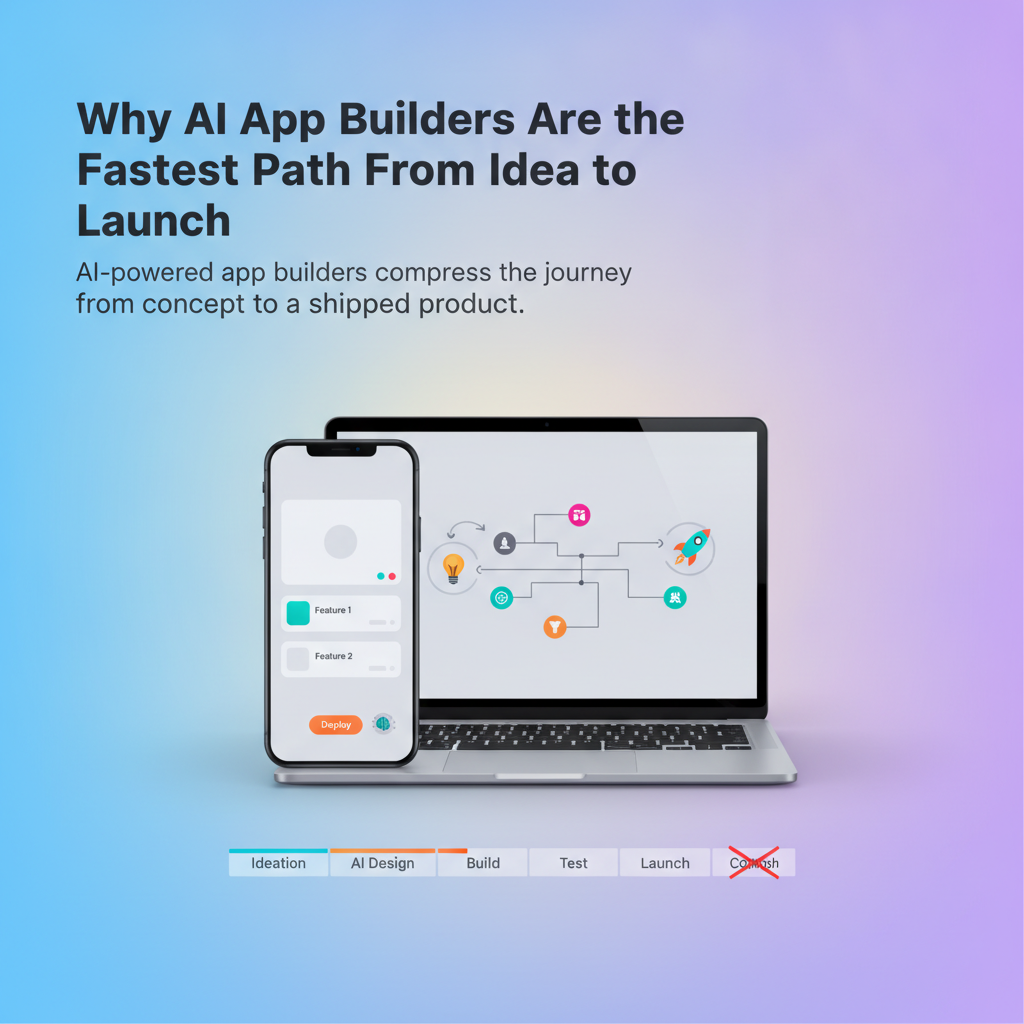
Why AI App Builders Are the Fastest Path From Idea to Launch
The entrepreneurial spirit is a powerful force, brimming with innovative ideas that have the potential to disrupt industries and change lives. Yet, the journey from a brilliant concept to a fully functional, launched application can often feel like an insurmountable mountain to climb. Traditional app development is a complex, time-consuming, and expensive endeavor, requiring significant technical expertise, resources, and patience. However, a new wave of innovation is democratizing app creation: AI-powered app builders. These platforms are fundamentally changing the development landscape, compressing the timeline from concept to a shipped product and making app ownership more accessible than ever before.
The traditional app development lifecycle is notorious for its length. It typically involves several distinct phases: ideation and planning, UI/UX design, front-end development, back-end development, testing, deployment, and ongoing maintenance. Each of these stages can take weeks or months, and any misstep or change in requirements can necessitate lengthy rework. For startups and small businesses, this extended timeline can mean the difference between capitalizing on a market opportunity and being left behind. Furthermore, the cost associated with hiring skilled developers, designers, and project managers can be prohibitive, especially for those with limited funding.
This is where AI app builders enter the scene, offering a radical departure from conventional methods. By leveraging artificial intelligence, these tools automate many of the repetitive and complex tasks involved in app development, allowing users to translate their ideas into tangible products with unprecedented speed. For instance, platforms like GetAppQuick empower individuals and businesses to bring their visions to life without needing to write extensive lines of code or manage large development teams. This acceleration is not just about speed; it's about enabling faster iteration, quicker market validation, and a more agile response to user feedback.
The AI Advantage: How It Works
At their core, AI app builders harness the power of machine learning and natural language processing to understand user intent and generate functional code. Instead of meticulously crafting every component, users can often describe their desired app features in plain language, and the AI translates these descriptions into actual app functionality.
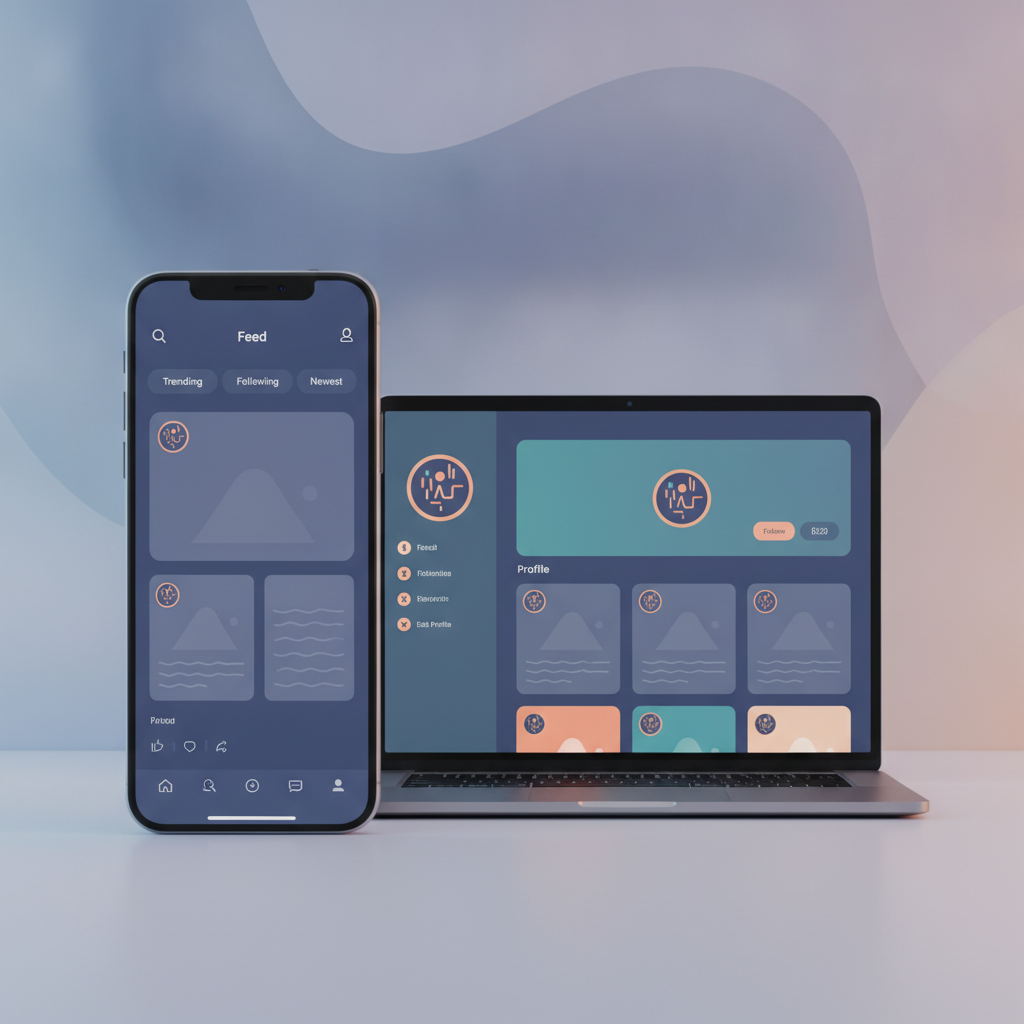
Natural Language to Code: One of the most significant advancements is the ability for AI to interpret natural language prompts. A user might simply type, "Create a social media app with user profiles, a news feed, and direct messaging," and the AI will begin generating the foundational structure for such an application. This dramatically lowers the barrier to entry, as it bypasses the need for users to learn complex programming languages or understand intricate development frameworks.
Intelligent Design and UI Generation: Beyond functionality, AI can also assist in the design process. Some builders can suggest UI layouts, color schemes, and component placements based on industry best practices or user-defined styles. This ensures that the generated app is not only functional but also visually appealing and user-friendly, without requiring a dedicated UI/UX designer.
Automated Backend and Database Setup: Setting up a robust backend and database is often one of the most challenging aspects of app development. AI app builders can automate this process, configuring servers, databases, and APIs based on the app's requirements. This includes creating data models, setting up user authentication, and managing data storage, tasks that would traditionally demand significant backend expertise.
Code Generation and Optimization: The AI doesn't just assemble pre-built blocks; it generates custom code tailored to the specific needs of the application. Many AI app builders use sophisticated algorithms to write clean, efficient code, often in popular frameworks like React Native, Flutter, or Swift. This means that the resulting apps are often well-structured and performant, ready for deployment.
Accelerating the Development Cycle
The impact of AI on the development timeline is profound. Let's break down how these builders compress each stage:
Ideation & Prototyping
Traditionally, the ideation phase involves extensive market research, user surveys, and the creation of wireframes and mockups. With AI app builders, this process is significantly streamlined. Users can quickly generate a functional prototype based on their initial idea, allowing them to visualize the app and gather early feedback. This rapid prototyping enables faster validation of core concepts, ensuring that development efforts are focused on viable ideas.
Design and User Interface (UI)
Instead of spending weeks on detailed UI/UX design, AI can generate initial designs or even complete interfaces based on simple text prompts or by analyzing existing app examples. This rapid design iteration allows for quick adjustments and A/B testing of different visual approaches.
Development
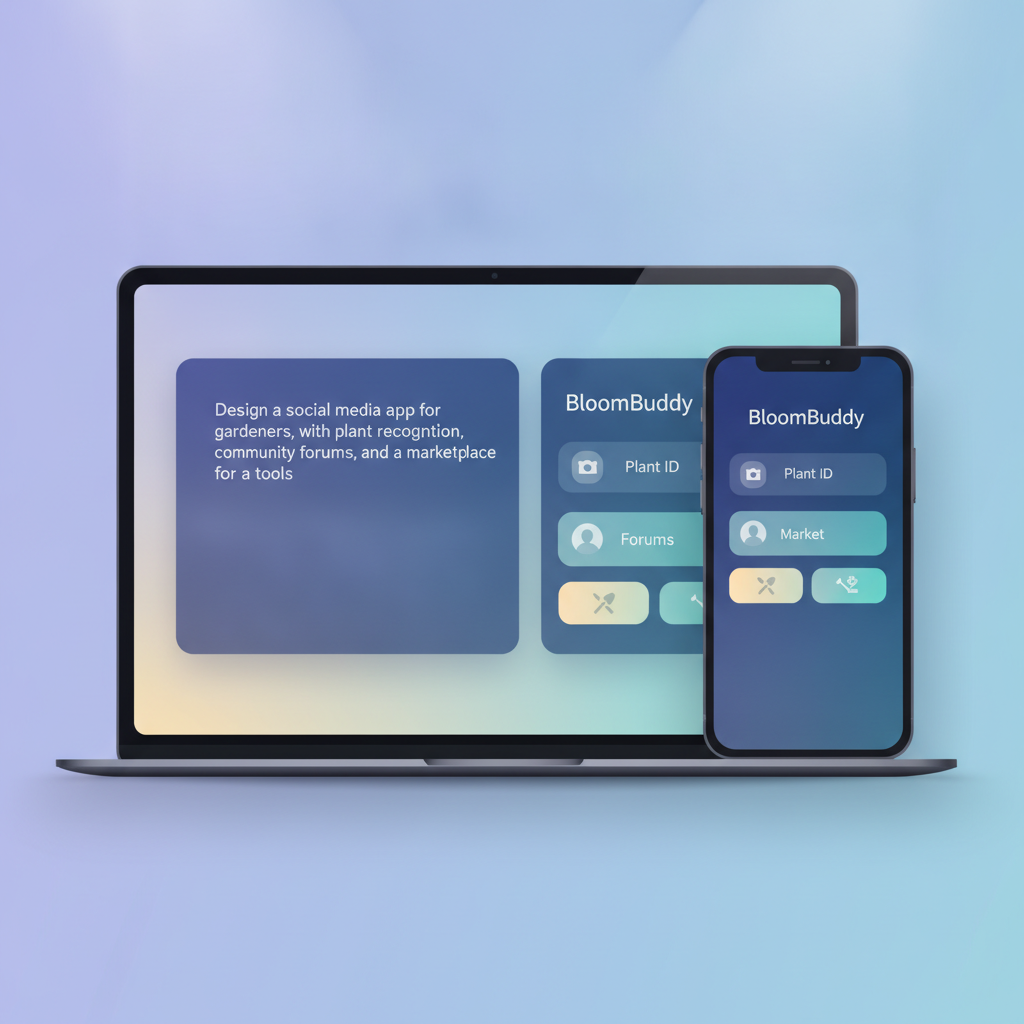
This is where the most significant time savings occur. AI app builders automate the coding process, generating front-end and back-end logic, database schemas, and API integrations. What might have taken a team of developers months can now be accomplished in days or even hours. For example, building a basic e-commerce app with user accounts, product listings, and a shopping cart could be initiated with a few descriptive sentences.
Consider a simple scenario where you want to create a task management app. A traditional approach would involve defining data models for tasks, users, and priorities, then writing code for CRUD (Create, Read, Update, Delete) operations, and building a user interface to interact with these functions. With an AI app builder, you might input something like:
"Build a task manager app. Users can create tasks with a title, description, due date, and priority level. They should be able to mark tasks as complete and filter them by priority and due date."
The AI would then proceed to:
- Generate Data Models: Define the necessary database fields for tasks and users.
- Create API Endpoints: Set up the logic for creating, retrieving, updating, and deleting tasks.
- Develop the User Interface: Generate screens for viewing tasks, creating new tasks, and editing existing ones, incorporating filtering and sorting functionalities.
Here's a conceptual snippet of what the AI might generate for the task data structure in a language like TypeScript:
interface Task {
  id: string;
  title: string;
  description?: string; // Optional description
  dueDate: Date;
  priority: 'low' | 'medium' | 'high';
  isCompleted: boolean;
  createdAt: Date;
  updatedAt: Date;
}

// Example of a function the AI might generate for adding a task
async function addTask(newTaskData: Omit<Task, 'id' | 'isCompleted' | 'createdAt' | 'updatedAt'>): Promise<Task> {
  // ... AI-generated logic for saving to database and returning the created task ...
  const createdTask: Task = {
    id: generateUniqueId(), // Placeholder for AI's ID generation
    ...newTaskData,
    isCompleted: false,
    createdAt: new Date(),
    updatedAt: new Date(),
  };
  console.log("Task created:", createdTask);
  return createdTask;
}
This abstract example highlights how AI abstracts away the boilerplate code, allowing developers or even non-developers to focus on the unique aspects of their application.
Testing and Deployment
Many AI app builders include integrated testing capabilities and simplify the deployment process. They can automatically generate unit tests for various components or provide tools for end-to-end testing. Deployment can often be as simple as clicking a button, with the AI handling the packaging and submission to app stores or web hosting.
Real-World Use Cases and Benefits
The impact of AI app builders extends across various industries and user types:
Startups and Entrepreneurs
For new ventures, speed is paramount. AI app builders allow founders to quickly launch a Minimum Viable Product (MVP) to test their market hypothesis, gather user feedback, and iterate rapidly. This agility can be the difference between success and failure in a competitive landscape. Platforms like GetAppQuick are particularly useful here, offering a way to transform a business idea into a functional app without the need for immediate, expensive development hires. For instance, an entrepreneur with a novel idea for a niche community platform could use GetAppQuick to build an MVP and gauge user interest before committing significant resources.
Small to Medium-Sized Businesses (SMBs)
SMBs often lack dedicated IT departments or the budget for custom software development. AI app builders enable them to create internal tools, customer-facing applications, or specialized portals to improve efficiency and customer engagement. This could include a custom inventory management app, a client portal for service businesses, or a simple booking system.
Individuals and Hobbyists
The democratization of app development means that individuals with specific needs can now build their own solutions. Whether it's a personal finance tracker, a hobby-specific organizer, or a tool to automate a personal workflow, AI app builders empower anyone with an idea to bring it to life.
Benefits at a Glance:
- Speed to Market: Launch products and features significantly faster.
- Reduced Costs: Lower development expenses by minimizing reliance on highly specialized (and expensive) human resources.
- Accessibility: Enables individuals with limited or no coding experience to build applications.
- Agility and Iteration: Facilitates rapid prototyping and quick adjustments based on feedback.
- Focus on Innovation: Allows teams to concentrate on unique business logic and user experience rather than repetitive coding tasks.
What to Watch For: Considerations and Limitations
While AI app builders offer remarkable advantages, it's crucial to approach them with realistic expectations and an understanding of their limitations.
Complexity and Customization
For highly complex, bespoke applications with unique algorithms, extensive third-party integrations, or demanding performance requirements, AI builders might still have limitations. While they can generate a vast range of functionalities, pushing the boundaries of what's possible might require custom coding that goes beyond the builder's capabilities.
Vendor Lock-in
Be aware of potential vendor lock-in. Some AI app builders generate proprietary code or rely on specific platform infrastructure, which can make it difficult to migrate your application to a different provider or self-host later on. It's essential to choose a platform that offers flexibility and data portability.
Security and Scalability
While reputable AI builders prioritize security and scalability, it's vital to scrutinize their underlying architecture and practices. Ensure the platform adheres to industry security standards and has a proven track record of handling high traffic and data loads if your app is expected to scale significantly.
Dependence on AI Accuracy
The quality of the generated app is directly dependent on the AI's understanding of your prompts and its underlying training data. Misinterpretations or bugs in the AI-generated code can occur, necessitating review and potential manual correction.
Evolving Landscape
The field of AI app development is rapidly evolving. New tools and features are emerging constantly. It's important to stay updated on the latest advancements and choose platforms that are actively being developed and improved.
Choosing the Right AI App Builder
When selecting an AI app builder, consider the following factors:
- Ease of Use: How intuitive is the interface? Can you achieve your desired results with minimal learning curve?
- Feature Set: Does the builder support the specific functionalities you need for your app?
- Customization Options: How much control do you have over the design and functionality?
- Code Quality and Exportability: Can you export the generated code, and is it clean, well-documented, and maintainable?
- Scalability and Performance: Can the platform handle growth in users and data?
- Pricing Model: Does the cost align with your budget and projected usage?
- Support and Community: Is there good documentation, customer support, and an active user community?
The Future of App Development
AI app builders are not merely a trend; they represent a fundamental shift in how software is created. As AI technology continues to advance, we can expect these platforms to become even more sophisticated, capable of handling increasingly complex projects with greater autonomy. The future likely involves a hybrid approach, where AI handles the heavy lifting of code generation and infrastructure management, allowing human developers to focus on higher-level problem-solving, creative design, and strategic innovation.
This democratization of development means that more individuals and organizations will be empowered to build the tools and applications they need, fostering a more innovative and dynamic digital ecosystem. The path from a brilliant idea to a launched product has never been shorter or more accessible.
Key Takeaways
- AI app builders drastically reduce the time and cost of app development by automating coding, design, and backend setup.
- They leverage natural language processing and machine learning to translate user ideas into functional applications.
- Key benefits include speed to market, lower costs, increased accessibility, and greater agility.
- Considerations include limitations in handling extreme complexity, potential vendor lock-in, and the need to verify AI-generated code.
- Choosing the right AI app builder involves evaluating ease of use, feature set, customization, scalability, and cost.
- AI app builders are transforming the industry, making app creation accessible to a wider audience and accelerating innovation.
Ready to ship your idea? Build it in minutes with GetAppQuick.