Vibe Coding is Here: Build Your Next App with Natural Language (Before Everyone Else!)
Brief: Explore the groundbreaking 'vibe coding' trend, driven by tools like Cursor and Claude Code, that's transforming app development by letting you describe your vision in plain English.
Remember the days when building an app felt like deciphering an ancient, cryptic language? You’d spend hours, if not weeks, pouring over documentation, wrestling with syntax, and praying your code compiled without a hitch. Those days are rapidly fading in the rearview mirror. A seismic shift is underway, a revolution powered by artificial intelligence that’s democratizing software development like never before. We're talking about "vibe coding" – the art of translating your app idea directly from natural language into functional code.
This isn't science fiction; it's the immediate future, and in some cases, the present reality. Tools like Cursor, an AI-first code editor, and large language models such as Claude (and its specialized code-generating variants) are leading the charge. They allow developers, and even non-developers, to describe what they want their app to do in plain English, and the AI generates the underlying code. At DC Codes, we're not just watching this trend; we're embracing it, and we believe you should too. If you’ve got an app idea brewing, there’s never been a better time to bring it to life, potentially faster and more efficiently than ever before. And for those who want to act on this trend now, with immediate, tangible results, our own AI-powered platform, GetAppQuick, is designed precisely for this purpose, turning your concepts into working applications with unprecedented speed.
The Genesis of Vibe Coding: AI Meets Human Intent
The concept of AI assisting with code isn't entirely new. We've seen intelligent code completion tools and linters for years. However, "vibe coding" represents a significant leap forward. It moves beyond simple suggestions to full-blown code generation based on high-level, human-understandable descriptions.
The driving force behind this evolution is the advancement in Large Language Models (LLMs). Models like OpenAI's GPT series, Google's Gemini, and Anthropic's Claude have demonstrated an uncanny ability to understand context, intent, and complex instructions. When trained on vast datasets of code, these models can learn the patterns, structures, and best practices of various programming languages.
Tools like Cursor are integrating these LLMs directly into the developer workflow. Cursor isn't just an editor; it's a development partner. You can ask it to "generate a React component for a user profile card with an avatar, name, and bio," and it will produce the JSX and CSS. More impressively, you can highlight a section of your existing code and ask Cursor to "refactor this to be more performant" or "add error handling for this API call." This conversational approach to coding fundamentally changes the developer experience.
Similarly, specialized AI models and services are emerging that focus purely on code generation from natural language prompts. While the exact methodologies are proprietary, the underlying principle is consistent: a sophisticated AI understands your English description and outputs code in your chosen language.
Why "Vibe Coding" Matters: Bridging the Gap
The most profound impact of vibe coding is its potential to dramatically lower the barrier to entry for app development.
- Democratization of Development: For entrepreneurs, designers, and product managers who have brilliant ideas but lack deep coding expertise, vibe coding opens up a new world of possibilities. They can now articulate their vision in a way that AI can understand and translate into a tangible product.
- Accelerated Prototyping: For experienced developers, vibe coding can supercharge the prototyping phase. Instead of manually writing boilerplate code for common features, you can describe them and have the AI generate them in seconds, allowing you to focus on the unique, complex logic of your application.
- Enhanced Collaboration: Imagine a designer describing a UI element they need, and the AI generating the front-end code for it. This can streamline communication between design and development teams, ensuring fidelity between the mockups and the final product.
- Exploration of New Ideas: The reduced friction in building applications means more ideas can be tested. This encourages innovation and experimentation, as the cost of creating a Minimum Viable Product (MVP) is significantly lowered.
The "vibe" in vibe coding refers to this ability to capture the essence or intent of what you want to build, rather than getting bogged down in the granular syntax. It’s about conveying the feeling, the functionality, the user experience – the "vibe" – and letting the AI handle the translation into precise instructions for the machine.
Practical Applications: From Simple Features to Complex Logic
Let's move beyond the theoretical and look at how vibe coding can be applied in practice. We'll use Dart with Flutter for our examples, as it's a popular choice for building cross-platform applications, and TypeScript for web development, known for its robustness.
Example 1: Building a Basic UI Component (Flutter/Dart)
Imagine you're building a social media app and need a user profile card.
Prompt: "Create a Flutter StatelessWidget called UserProfileCard that takes a String imageUrl, String userName, and String bio as parameters. The card should have a circular CircleAvatar displaying the image, followed by a Column containing a Text widget for the username and another Text widget for the bio. Add some padding around the content."
An AI code assistant, integrated into an editor like Cursor, or a dedicated code generation tool, could produce something like this:
import 'package:flutter/material.dart';

class UserProfileCard extends StatelessWidget {
  final String imageUrl;
  final String userName;
  final String bio;

  const UserProfileCard({
    Key? key,
    required this.imageUrl,
    required this.userName,
    required this.bio,
  }) : super(key: key);

  @override
  Widget build(BuildContext context) {
    return Card(
      margin: const EdgeInsets.all(16.0),
      child: Padding(
        padding: const EdgeInsets.all(16.0),
        child: Column(
          mainAxisSize: MainAxisSize.min,
          children: [
            CircleAvatar(
              radius: 40,
              backgroundImage: NetworkImage(imageUrl),
            ),
            const SizedBox(height: 16),
            Text(
              userName,
              style: const TextStyle(
                fontSize: 20,
                fontWeight: FontWeight.bold,
              ),
            ),
            const SizedBox(height: 8),
            Text(
              bio,
              textAlign: TextAlign.center,
              style: const TextStyle(fontSize: 16),
            ),
          ],
        ),
      ),
    );
  }
}
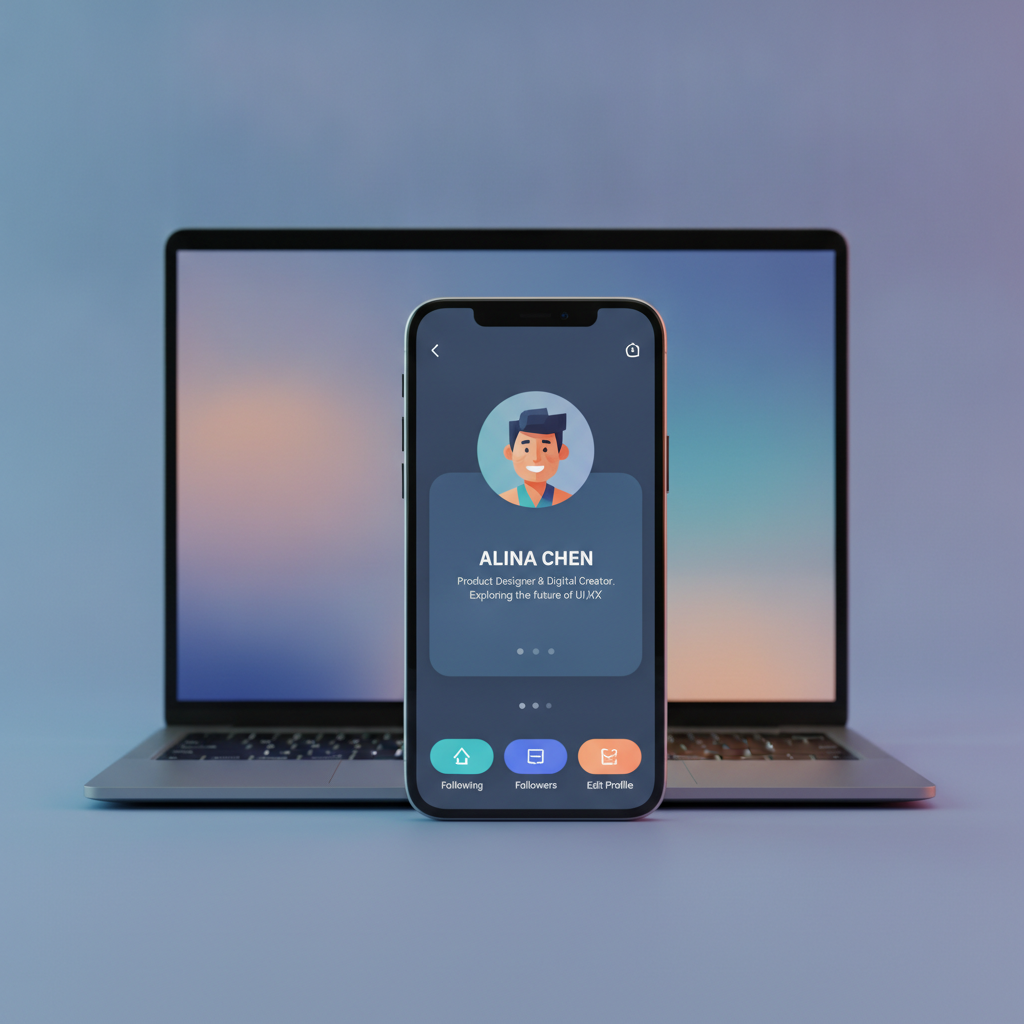
This code snippet directly translates the natural language description into a functional Flutter widget. The AI understands StatelessWidget, imageUrl, userName, bio, CircularAvatar, Column, Text, and appropriate styling parameters like padding and font weights.
Example 2: Implementing a Basic API Fetch (TypeScript/React)
Let's say you're building a web application and need to fetch data from a public API, like a list of posts.
Prompt: "Write a TypeScript function using fetch that makes a GET request to https://jsonplaceholder.typicode.com/posts. The function should be asynchronous, return a Promise that resolves with the JSON response, and include basic error handling to reject the Promise if the request fails or the response is not OK."
Here's what an AI might generate:
async function fetchPosts(): Promise<any[]> {
  const apiUrl = 'https://jsonplaceholder.typicode.com/posts';

  try {
    const response = await fetch(apiUrl);

    if (!response.ok) {
      throw new Error(`HTTP error! status: ${response.status}`);
    }

    const data: any[] = await response.json();
    return data;
  } catch (error) {
    console.error("Failed to fetch posts:", error);
    throw error; // Re-throw to allow calling code to handle it
  }
}

// Example usage:
async function displayPosts() {
  try {
    const posts = await fetchPosts();
    console.log("Fetched posts:", posts);
    // Here you would update your UI with the posts data
  } catch (error) {
    console.error("Could not display posts.");
  }
}

displayPosts();
This TypeScript example showcases the AI's ability to understand asynchronous operations (async/await), HTTP request methods (GET), response handling (response.ok, response.json()), and error management (try/catch). It even includes a basic example of how to call the function.
The Tools Empowering the Vibe
Several key players are making vibe coding a reality:
- Cursor: As mentioned, Cursor is an AI-first code editor that integrates LLMs deeply into the development workflow. It offers features like chat-based code generation, code explanation, and refactoring directly within the editor. Read more about Cursor here.
- Anthropic's Claude: While not exclusively a coding tool, Claude's advanced natural language understanding and reasoning capabilities make it highly effective for generating and explaining code. Developers can use it via its API or chat interface to get code snippets, debug issues, or brainstorm solutions. Learn about Claude.
- GitHub Copilot: Building on OpenAI's Codex model, Copilot acts as an AI pair programmer, suggesting lines of code or entire functions as you type. While not strictly "natural language to code" in the prompt-response sense of vibe coding, it's a crucial step in AI-assisted development that understands context and intent. Explore GitHub Copilot.
- Specialized AI Code Generators: Beyond these prominent examples, numerous startups and research projects are developing AI models specifically for translating natural language into code across various languages and frameworks. The landscape is evolving rapidly.
The Nuances and Challenges of Vibe Coding
While the potential is immense, it's crucial to approach vibe coding with a realistic perspective.
- Prompt Engineering is Key: The quality of the generated code is highly dependent on the quality of the prompt. Learning to craft clear, specific, and unambiguous prompts – a skill often called "prompt engineering" – is becoming essential.
- Not a Replacement for Developers (Yet): Vibe coding is a powerful tool for developers, augmenting their capabilities. It's unlikely to replace the need for skilled software engineers who understand system architecture, complex problem-solving, security, and performance optimization. AI can generate code, but human oversight is still critical for building robust, scalable, and secure applications.
- Debugging and Verification: AI-generated code, like human-written code, can contain bugs. Developers still need to be adept at debugging and verifying the correctness and efficiency of the AI's output.
- Contextual Understanding Limits: While LLMs are improving rapidly, they can sometimes misunderstand context, produce suboptimal solutions, or hallucinate code that doesn't quite work.
- Intellectual Property and Security: As AI generates code based on vast datasets, questions around intellectual property, licensing, and potential security vulnerabilities in generated code are still being actively discussed and addressed.
Integrating Vibe Coding into Your Workflow
For development teams, adopting vibe coding means rethinking certain aspects of the software development lifecycle:
- Embrace AI-Assisted Tools: Equip your team with tools like Cursor, GitHub Copilot, or explore using LLMs via APIs for code generation tasks.
- Train on Prompt Engineering: Invest time in teaching your team how to write effective prompts that yield the best results from AI code generators.
- Focus on Higher-Level Tasks: Encourage developers to use AI for generating boilerplate, repetitive tasks, or initial drafts, freeing them up for complex architecture design, algorithm development, and critical thinking.
- Implement Robust Review Processes: Maintain rigorous code review practices. AI-generated code should be scrutinized just as carefully as human-written code, if not more so, until confidence in the AI's output is established.
- Iterative Development: Use vibe coding to rapidly iterate on features. Describe a feature, get the AI's output, review and refine it, and repeat.
For aspiring entrepreneurs or those with a product idea, the path is even more direct. Instead of needing to hire a development team upfront, you can leverage platforms that embody the principles of vibe coding.
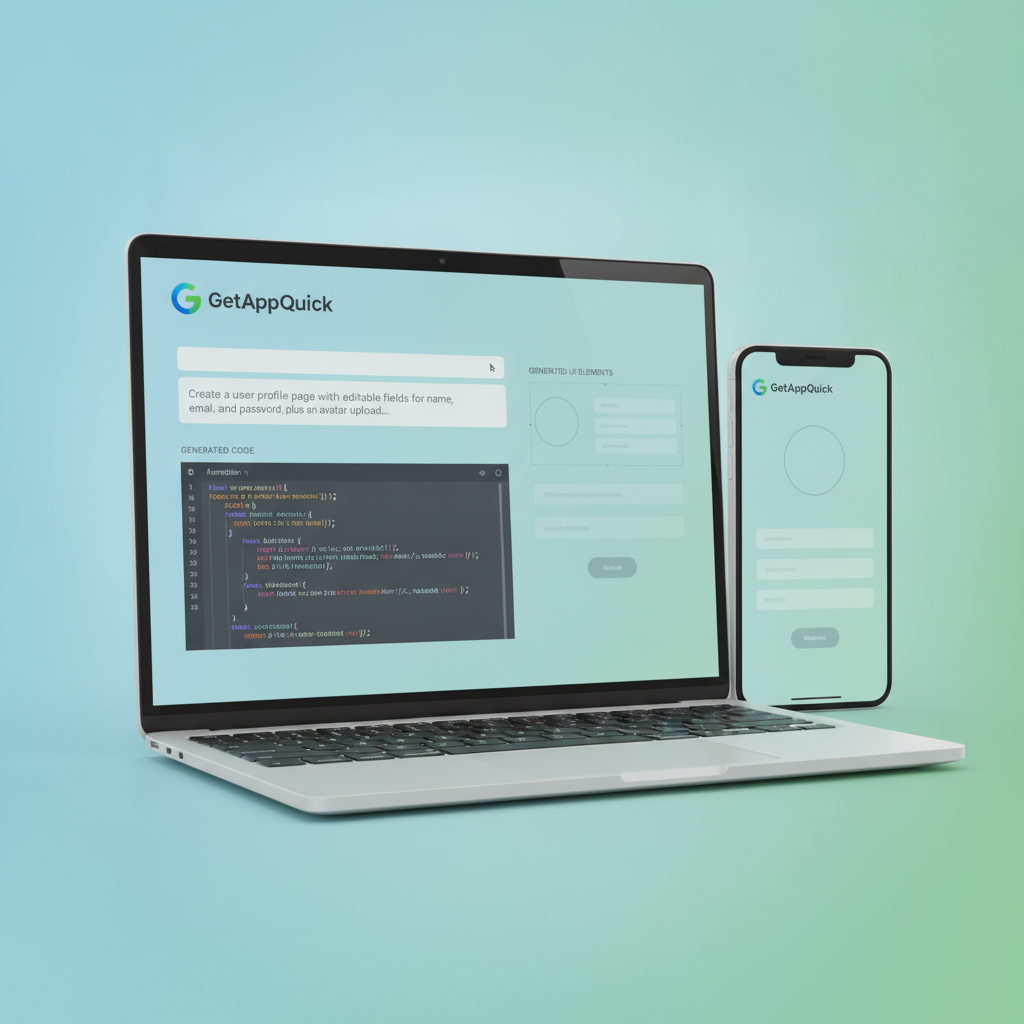
Consider a scenario where you need to build a simple e-commerce app for selling handmade crafts. You have a vision for how users should browse products, add them to a cart, and checkout. Platforms like GetAppQuick are built precisely for this. You can describe your app's core functionality – "I want an app where users can upload product photos, list prices, and customers can add items to a shopping cart and pay via Stripe" – and the AI translates this into a functional application. This allows you to validate your business idea quickly and efficiently, without writing a single line of code yourself, or needing a large, expensive development team.
The Future is Conversational
The trend towards vibe coding is not a fleeting fad; it's a fundamental shift in how we interact with technology. As AI models become more sophisticated, we can expect them to handle increasingly complex programming tasks.
We might see AI that can:
- Take a detailed business requirement document and generate a complete application architecture.
- Understand a user's spoken description of a desired feature and implement it in real-time.
- Proactively identify potential performance bottlenecks or security risks in code and suggest or implement fixes.
- Translate code between different programming languages with near-perfect accuracy.
The ultimate goal is to make software creation as intuitive as expressing an idea. While we're not entirely there yet, the progress is astonishing. The ability to describe your app's "vibe" and have it materialize is rapidly moving from a developer's dream to a practical reality.
Key Takeaways
- Vibe Coding: The trend of building applications using natural language descriptions, powered by advanced AI and LLMs.
- Key Enablers: Tools like Cursor and advanced LLMs (e.g., Claude, GPT) are driving this shift.
- Benefits: Lower barrier to entry, accelerated prototyping, improved collaboration, and fostering innovation.
- Practical Application: AI can generate UI components, API integrations, and more, based on English prompts.
- Challenges: Prompt engineering, AI limitations, debugging, and security are areas requiring human oversight.
- Empowerment: Empowers non-developers and speeds up development for experienced coders.
- Future: Expect more sophisticated AI-driven code generation and a more conversational approach to software development.
- Actionable Solution: Platforms like GetAppQuick offer a direct, immediate way to leverage these AI capabilities for rapid app development without deep technical expertise.
The era of obscure syntax and complex command lines is evolving. The power to create is becoming more accessible, more intuitive, and more aligned with human thought. Whether you're a seasoned developer looking to boost productivity or an entrepreneur with a groundbreaking app idea, now is the time to explore the possibilities of vibe coding.
Ready to ship your idea? Build it in minutes with GetAppQuick.