Introduction: The AI Bill Arrives — What Now for Coding Teams?
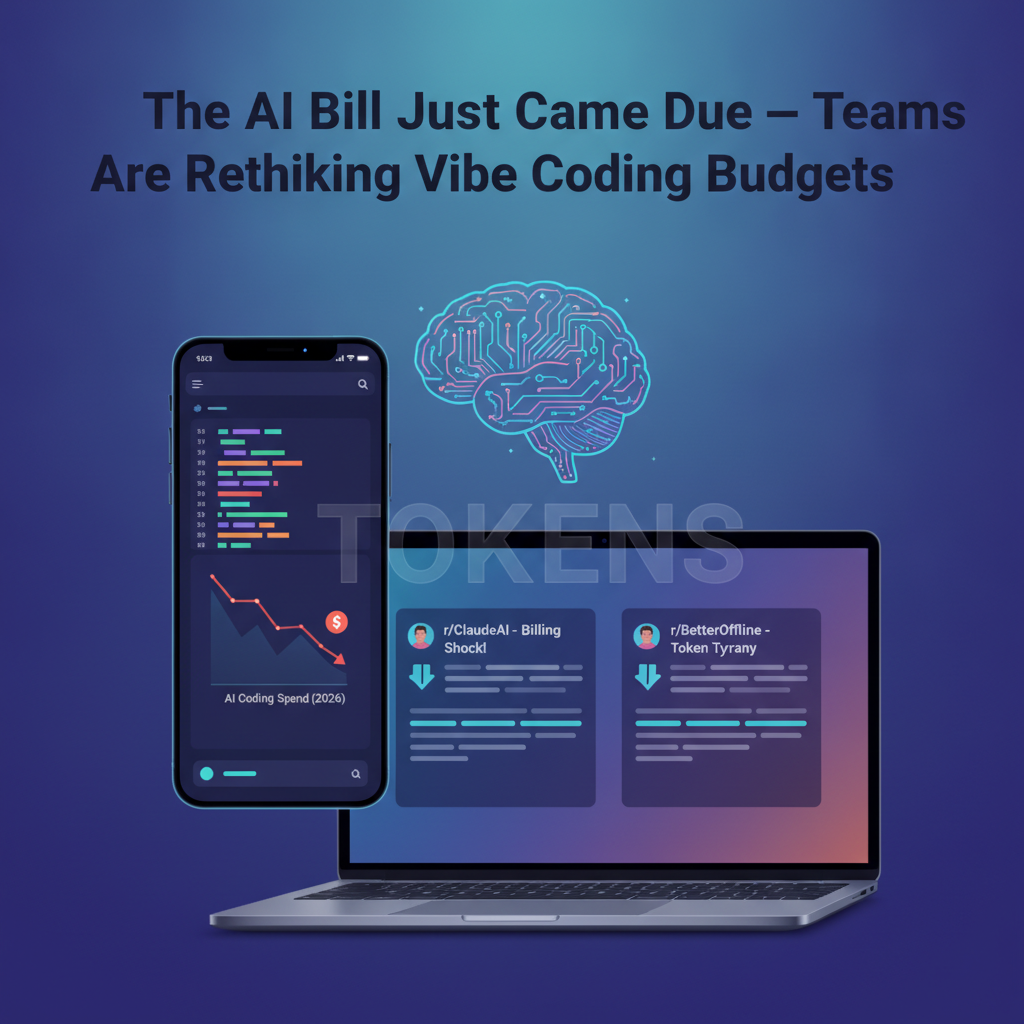
It happened almost overnight: companies everywhere woke up to a line item on their 2026 budget proposal labeled “AI Coding Spend.” The era of free-flowing, unlimited-code-generation AI tools—like Claude, Gemini, and Copilot—suddenly collided with the harsh reality of token-based billing. The viral r/ClaudeAI and r/BetterOffline Reddit posts tell the story: overnight, organizations are slashing AI-powered development budgets, rethinking their beloved “vibe coding” workflows, and scrambling for more sustainable approaches.
But not all is doom and gloom. Leaner, smarter teams are finding ways to ship more with less—streamlining workflows, prioritizing code quality, and turning to platforms like GetAppQuick, DC Codes’ AI-powered app builder, to get real products built without burning through their entire budget on tokens. In this post, we’ll explore how the new billing landscape is reshaping software development, share practical strategies (with code!), and help you focus your AI spend where it matters most.
The Vibe Coding Era: What We’re Losing
“Vibe coding” describes the emergent workflow that flourished with unlimited AI code generation: developers chat, sketch, and riff with AI copilots, instantly iterating through dozens of possible solutions. The cost? Previously, almost nothing. But with token-based billing, every prompt, every code suggestion, every playful experiment now has a price tag.
What’s Actually Happening?
- Reddit’s r/ClaudeAI is awash with screenshots of monthly bills spiking from $0 to $800+ for mid-sized teams.
- r/BetterOffline posts feature teams reverting to local, offline LLMs—accepting less-powerful models to avoid metered costs.
- CTOs are reporting to boards on “token efficiency,” a metric unheard of just a year ago.
The cultural shift is profound. No longer can teams afford to treat AI copilots as tireless, zero-cost pair programmers. Instead, every API call is an expense, and “vibe coding” now must justify its ROI.
The Token-Based Billing Crunch: How It Works
In 2026, most major AI coding tools switched to token-based billing. Let’s demystify what this means for teams.
What is Token Billing?
- A token is a chunk of text (usually a word or part of a word).
- Every prompt and response is measured in tokens.
- You pay per token, often at a rate of $0.02–$0.08 per 1K tokens.
- Complex, verbose prompts cost more.
Example: Dart Code Prompt
Suppose you ask your LLM assistant:
“Write a Flutter widget that displays a profile card with name, avatar, and contact buttons.”
The full round-trip might eat 350 tokens (prompt + AI response). At $0.06/1K tokens, that’s about $0.021—multiplied by hundreds of prompts per day, per developer.
Example: TypeScript/React Prompt
“Refactor this data fetching hook to use SWR and add error boundary handling.”
Long code and comments? More tokens, higher cost.
The Real Problem: Unpredictable Spend
Unlike traditional software tooling (flat fee, or per-seat), token billing is variable and hard to forecast. Teams with a “move fast and break things” approach can rack up huge bills before anyone notices.
Real-World Impact: Teams Under Pressure
Let’s look at some concrete symptoms from the r/ClaudeAI and r/BetterOffline threads:
- Budget freezes: Companies pausing AI tool usage mid-quarter to avoid overruns.
- Restrictive policies: Mandating that only senior devs use AI coding tools, or requiring approval for large prompt jobs.
- Tool churn: Teams abandoning cloud-based LLMs for offline alternatives like Ollama and open-source models.
Developers share stories of productivity drops, increased manual coding, and new bottlenecks in prototyping and iteration. The magic of instant code generation is fading—unless you find a new strategy.
Smarter AI Coding: How Teams Are Adapting
The teams weathering this storm aren’t those who abandon AI—but those who adapt. Here are the top strategies we’re seeing:
1. Shift AI Use to High-Leverage Tasks
Instead of asking the AI for every trivial snippet, teams now reserve AI spend for:
- Complex code translation (e.g., legacy codebases to modern stacks)
- Automated test generation
- Architecture scaffolding
Example: Dart/Flutter Widget Scaffolding
Let’s see how you might use your AI tokens wisely:
// Instead of asking for every widget, focus on complex ones:
class AdaptiveProfileCard extends StatelessWidget {
  final String name;
  final String avatarUrl;
  final List<ContactMethod> contacts;

  const AdaptiveProfileCard({
    required this.name,
    required this.avatarUrl,
    required this.contacts,
    super.key,
  });

  @override
  Widget build(BuildContext context) {
    return Card(
      child: Column(
        children: [
          CircleAvatar(backgroundImage: NetworkImage(avatarUrl)),
          Text(name),
          Row(
            children: contacts.map((c) => IconButton(
              icon: Icon(c.icon),
              onPressed: () => c.action(),
            )).toList(),
          ),
        ],
      ),
    );
  }
}
Instead of burning tokens on every minor layout change, you might hand-code styling or adjustments.
2. Invest in Prompt Engineering
Well-crafted prompts mean fewer API calls and better results. Teams are sharing prompt templates, standardizing requests, and avoiding “chatty” interactions.
Example: Efficient TypeScript Prompt
Inefficient:
“Can you write a React form validation hook, and maybe show me some examples and explain why this way is better than other ways?”
Efficient:
“Write a reusable TypeScript React hook for validating an email field. No explanations.”
3. Use AI App Builders for Prototypes
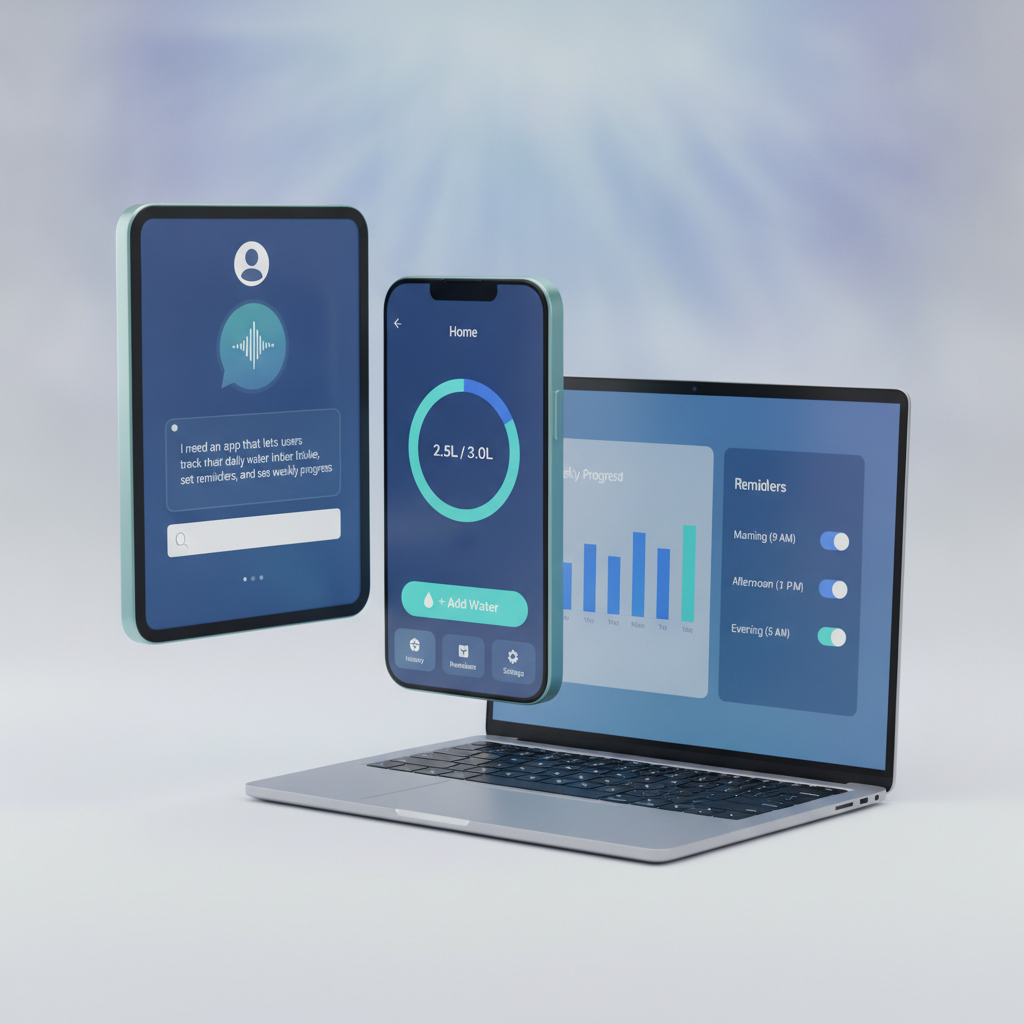
Instead of “vibe coding” raw code, many teams are turning to AI-powered app builders like GetAppQuick—where a whole app scaffold is generated from a concise description, minimizing token use while maximizing output.
Concrete Use Case:
A startup needs a Flutter MVP for a fitness tracking app. Rather than dozens of expensive AI chat prompts for each screen, they use GetAppQuick to generate the entire project structure, with UI, navigation, and sample content, from a single input. Then, developers fine-tune the result, spending tokens only on high-impact code suggestions.
A New AI Coding Budget: What Should You Plan For?
If you haven’t yet adjusted your 2026 budget, here’s what to consider:
1. Forecast Token Consumption
- Audit your team’s daily/weekly LLM usage.
- Identify high-cost workflows: are there certain devs or teams burning disproportionate tokens?
- Use built-in dashboards or third-party tools to monitor token spend.
2. Adopt Cost Controls
- Set per-user and per-project token limits.
- Educate developers about the cost implications of their prompt habits.
- Automate alerts for spend spikes.
3. Hybridize Your Workflow
- Use local/offline models for routine code completions.
- Save cloud LLM spend for strategic/complex tasks.
- Integrate tools like GetAppQuick that optimize token efficiency by batching app generation into single, powerful actions.

Practical Example: Budget-Aware Coding in TypeScript
Let’s look at an example workflow that combines local/offline LLMs with targeted cloud AI use:
// Local LLM (e.g., Ollama) is used for basic TypeScript function stubs:
function calculateBMI(weight: number, height: number): number {
  // auto-completed locally
  return weight / (height * height);
}

// For more complex logic (e.g., integrating with a third-party API), a single, well-crafted prompt is sent to the cloud AI:
const openaiPrompt = `
  Integrate this function with the Fitbit API.
  Requirements:
  - Fetch daily activity data
  - Calculate BMI trends
  - Return a summary object
  Only output the function code.
`;

// ...cloud LLM call here...
This hybrid approach helps you keep basic work offline and only pay for what truly requires the “big guns.”
GetAppQuick: Building More, Spending Less
Here’s where a platform like GetAppQuick shines. Instead of incremental, token-guzzling development, you can describe your app’s features, UI, and logic in plain language, and get a complete, production-ready codebase for platforms like Flutter or React Native. This streamlines prototyping and MVP launches, letting you reserve precious AI tokens for custom logic, not boilerplate.
Bonus: GetAppQuick offers transparent pricing and built-in spend controls, so you can plan your budget with confidence.
Key Takeaways
- Token-based billing for AI coding is here to stay. Unlimited “vibe coding” is no longer viable for most teams.
- Smarter AI spend means prioritizing complex, high-leverage coding tasks. Don’t waste tokens on trivial prompts.
- Prompt engineering is your new superpower. Efficient, precise prompts save money and time.
- Adopt hybrid workflows. Use local/offline models for basic work and cloud AI for strategic needs.
- Platforms like GetAppQuick help you do more with less. Generate whole apps with minimal prompts, keeping your budget in check.
Conclusion: Build Smarter in the Age of Token Billing
The AI bill has come due, but forward-thinking teams aren’t giving up—they’re getting savvier. By focusing your AI spend, refining your prompt strategy, and leveraging platforms like GetAppQuick for high-leverage app generation, you can keep innovating without blowing your budget.
Ready to ship your idea? Build it in minutes with GetAppQuick.