
SpaceX's $60B Cursor Acquisition: What This Means for Rapid App Development NOW
The tech world is abuzz with the monumental news: SpaceX, a titan of innovation, has reportedly acquired Cursor, a cutting-edge AI coding assistant, for an astonishing $60 billion. This isn't just another high-profile tech deal; it's a seismic shift that profoundly validates the trajectory of artificial intelligence in software development. For businesses seeking to navigate the rapidly evolving digital landscape, this acquisition signals a clear future for faster, more efficient app creation. While the headline figure is staggering, the real story lies in what it means for the democratization of app development and how tools like GetAppQuick are poised to lead this revolution.
The AI Co-Pilot: From Sci-Fi to Standard Practice
For years, AI in coding has been the stuff of science fiction – a helpful but often distant dream. Now, it's becoming an indispensable reality. AI coding assistants, like Cursor, are moving beyond simple code completion to become genuine collaborators in the development process. They can understand context, suggest entire blocks of code, refactor existing code, and even help debug complex issues.
The reported SpaceX acquisition of Cursor at such a colossal valuation underscores the immense strategic importance placed on these AI tools. It suggests that companies are no longer viewing AI coding assistants as mere productivity enhancements, but as core components of their future technological infrastructure. This signals a broader industry trend: the increasing reliance on AI to accelerate development cycles and tackle complexity.
What is Cursor, and Why the Hype?
Cursor is an AI-first code editor designed from the ground up to integrate advanced AI capabilities directly into the developer workflow. Unlike traditional editors that bolt on AI features, Cursor's architecture is built around them. This allows for a deeper understanding of codebases and more sophisticated AI interactions.
Key features that likely attracted SpaceX include:
- Context-Aware AI: Cursor understands the entire context of your project, not just the current file, leading to more relevant and accurate suggestions.
- Generative Capabilities: It can generate code from natural language prompts, boilerplate code, and even entire functions.
- Codebase-Wide Reasoning: The AI can analyze and reason across your entire codebase, helping with tasks like understanding legacy code or identifying potential bugs.
- Integration with LLMs: It leverages powerful Large Language Models (LLMs) to provide intelligent assistance.
The sheer scale of the acquisition implies that SpaceX sees Cursor’s AI as a critical enabler for its ambitious projects, potentially accelerating the development of software for its rockets, satellites, and other ventures. This move validates the market’s belief in the power of AI to drastically reduce development time and costs.
The Ripple Effect: Democratizing App Development
This massive investment in AI coding tools has profound implications for businesses of all sizes, especially those looking to build and deploy applications quickly. Traditionally, developing a robust application required a team of specialized developers, significant time, and substantial financial investment. This often acted as a barrier for many businesses with innovative ideas but limited resources.
AI coding assistants are changing this paradigm by:
- Lowering the Barrier to Entry: Developers, even those with less experience, can leverage AI to write more complex code faster. Non-developers can also start to prototype and build applications by describing their vision to AI.
- Accelerating Prototyping and MVPs: The ability to generate code quickly allows for rapid iteration on ideas, making it easier and faster to build Minimum Viable Products (MVPs) and test market hypotheses.
- Boosting Developer Productivity: Experienced developers can offload repetitive tasks, focus on complex problem-solving, and write cleaner, more efficient code.
- Reducing Development Costs: By speeding up the development process and potentially requiring smaller teams, AI tools can significantly cut down on the cost of app creation.
This democratization is precisely where platforms like GetAppQuick shine. They harness the power of AI to abstract away much of the complexity, allowing users to transform an idea into a functional app with unprecedented speed, often without needing to write extensive code.
Practical Implications for Businesses
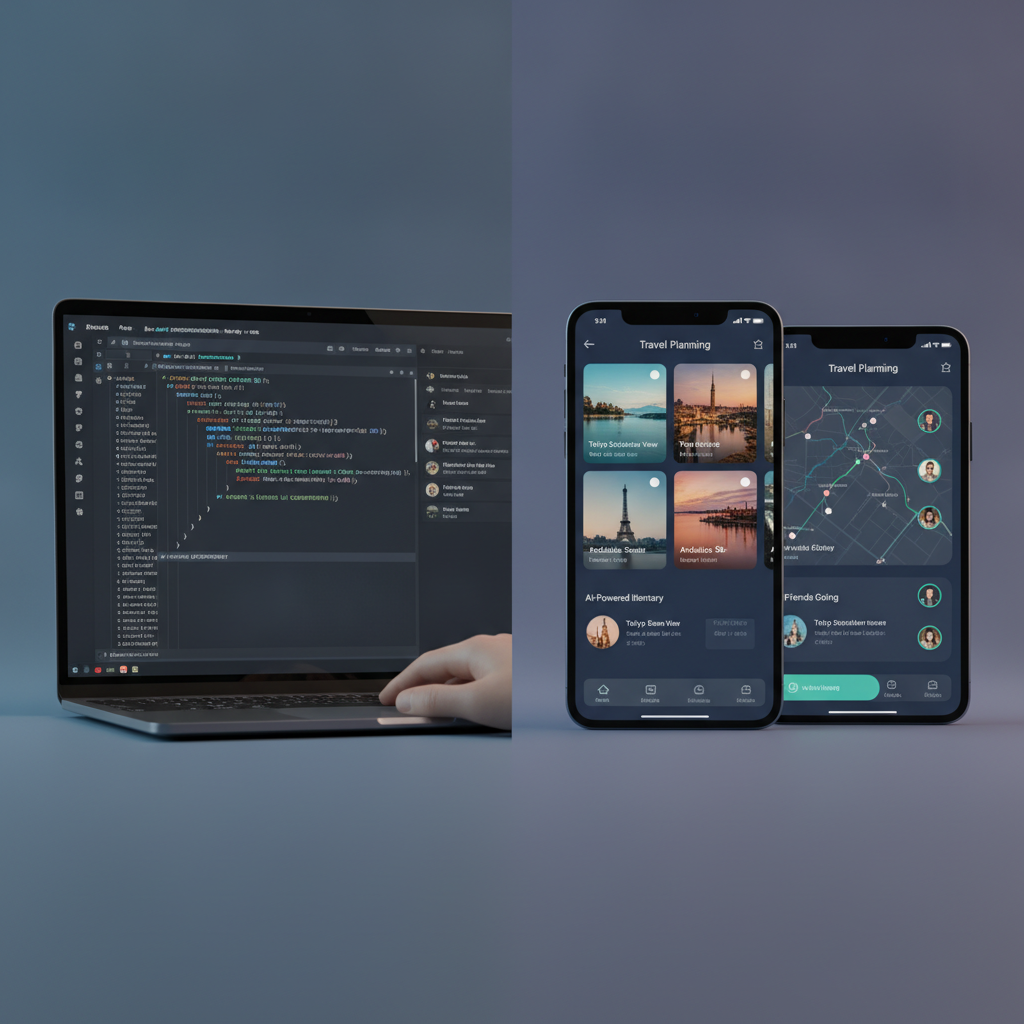
Consider a startup with a groundbreaking idea for a customer management platform. Instead of spending months and tens of thousands of dollars on initial development, they could potentially use AI coding tools to:
- Define Features in Natural Language: Describe the desired features, user flows, and data structures.
- Generate Core Logic: AI assistants can generate the backend APIs, database schemas, and fundamental business logic.
- Rapid UI Prototyping: Quickly scaffold user interfaces based on design descriptions or even wireframes.
- Automated Testing: Assist in writing unit and integration tests to ensure code quality.
- Refactoring and Optimization: Improve the efficiency and maintainability of the generated code.
For example, imagine needing to implement a user authentication flow. With an AI assistant, you might prompt: "Create a secure user registration and login system with email verification and password reset functionality, using JWT for authentication." The AI could then generate the necessary backend code (e.g., in Node.js/TypeScript) and frontend components (e.g., in React or Vue.js).
Here’s a simplified TypeScript example of what an AI might generate for a basic API endpoint for user registration, given a prompt:
// Function to register a new user
async function registerUser(email: string, password: string): Promise<{ userId: string; message: string }> {
    // Validate email format
    if (!isValidEmail(email)) {
        throw new Error("Invalid email format.");
    }

    // Check if user already exists
    const existingUser = await findUserByEmail(email);
    if (existingUser) {
        throw new Error("User with this email already exists.");
    }

    // Hash the password
    const hashedPassword = await hashPassword(password);

    // Create new user record in the database
    const newUser = await createUser({ email, password: hashedPassword });

    // Send verification email (placeholder)
    await sendVerificationEmail(newUser.email);

    return { userId: newUser.id, message: "User registered successfully. Please check your email to verify." };
}

// --- Helper functions (examples) ---
function isValidEmail(email: string): boolean {
    const emailRegex = /^[^\s@]+@[^\s@]+\.[^\s@]+$/;
    return emailRegex.test(email);
}

async function findUserByEmail(email: string): Promise<any | null> {
    // Placeholder for database query
    console.log(`Searching for user with email: ${email}`);
    return null; // Assume no user found for simplicity
}

async function hashPassword(password: string): Promise<string> {
    // Placeholder for password hashing (e.g., using bcrypt)
    console.log("Hashing password...");
    return `hashed_${password}`;
}

async function createUser(userData: any): Promise<any> {
    // Placeholder for database insertion
    console.log("Creating user in database:", userData);
    return { id: "user-123", ...userData };
}

async function sendVerificationEmail(email: string): Promise<void> {
    // Placeholder for sending email
    console.log(`Sending verification email to ${email}...`);
}

// Example usage:
// registerUser("test@example.com", "securepassword123")
//     .then(result => console.log(result))
//     .catch(error => console.error(error.message));
This snippet, generated by an AI assistant based on a natural language prompt, provides a foundational structure for user registration. A developer would then review, refine, and integrate this into a larger application, significantly cutting down the initial coding time.
The Future is Now: Beyond Traditional Development
The SpaceX-Cursor deal isn't just about speed; it's about fundamentally changing who can build software and how quickly they can bring ideas to market. This trend is already being embraced by platforms like GetAppQuick, which are designed to be highly accessible, leveraging AI to translate user requirements directly into functional applications.
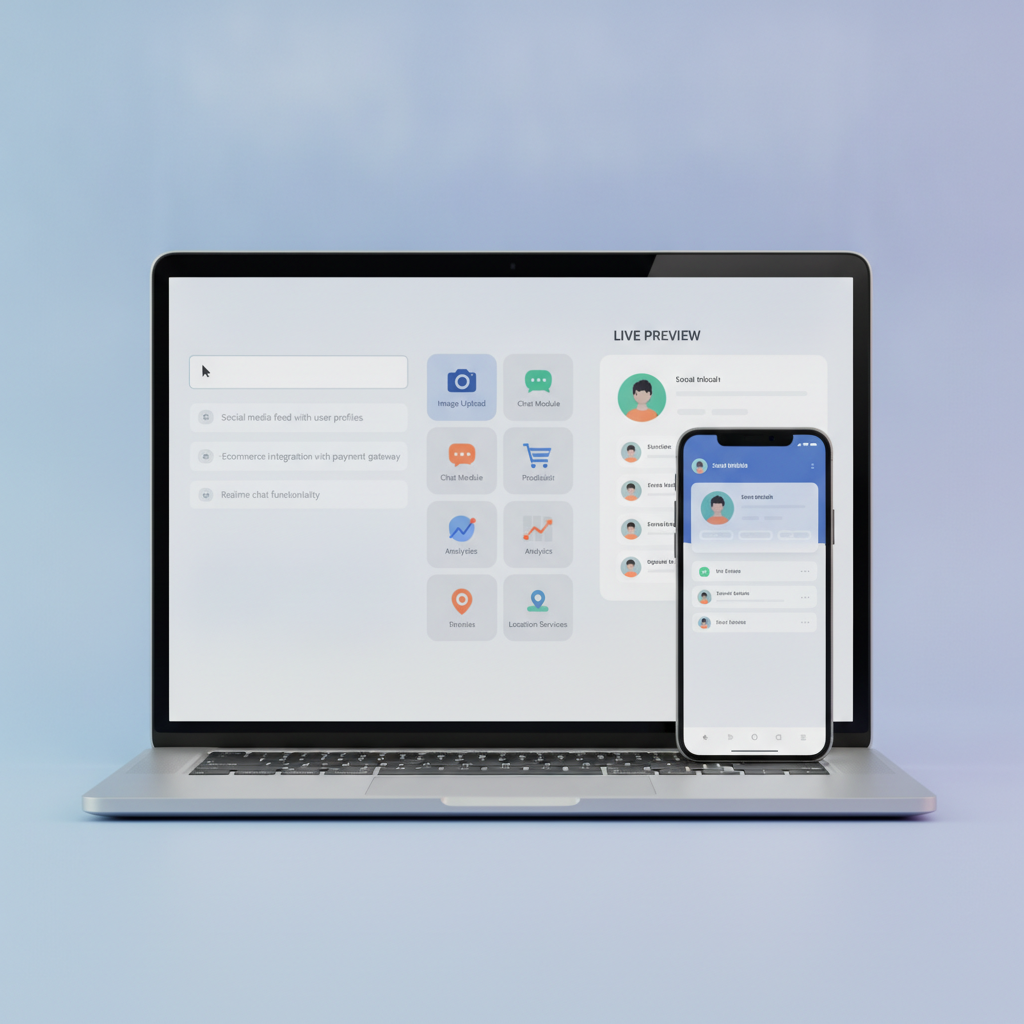
Think about complex workflows or niche business needs. Instead of commissioning custom development, which can be prohibitively expensive and time-consuming, businesses can now leverage AI-powered builders to create bespoke solutions rapidly. This opens up possibilities for:
- Internal Tools: Building custom dashboards, workflow automation tools, or data analysis platforms tailored to specific company needs.
- Niche Market Apps: Creating specialized mobile or web applications for industries that might not have the volume to justify traditional, lengthy development cycles.
- Rapid Market Testing: Quickly launching an app to gauge user interest before committing significant resources to a full-scale development project.
Navigating the Landscape with AI
As AI coding assistants become more sophisticated, the line between a "developer" and an "app creator" blurs. This doesn't diminish the role of skilled developers; rather, it elevates their capabilities. They can now focus on architectural design, complex algorithms, performance optimization, and the strategic implementation of AI, rather than getting bogged down in routine coding tasks.
For businesses, this translates into a significant competitive advantage. The ability to iterate faster, respond to market changes more agilely, and bring innovative products to life with reduced friction is no longer a distant aspiration but an immediate opportunity.
Key Takeaways
The reported $60 billion acquisition of Cursor by SpaceX is a landmark event, highlighting the immense value and strategic importance of AI in software development. Here's what this means for rapid app development now:
- AI Coding Assistants are Mainstream: Tools like Cursor are no longer niche; they represent the future of how software is built, validated by massive industry investment.
- Accelerated Development Cycles: AI significantly speeds up coding, debugging, and refactoring, enabling faster time-to-market for applications.
- Democratization of App Creation: The barrier to entry for building sophisticated applications is lowered, empowering more individuals and businesses.
- Cost Reduction: Faster development and increased efficiency translate to lower overall costs for app development.
- Focus on Innovation: Developers can shift focus from boilerplate code to higher-level problem-solving and architectural design.
- Rise of AI-Powered Builders: Platforms that abstract complexity and leverage AI for intuitive app creation, like GetAppQuick, are becoming essential tools for businesses aiming for speed and agility.
This is a pivotal moment for the tech industry. The convergence of powerful AI and accessible development tools means that bringing your digital vision to life is faster, more affordable, and more achievable than ever before.
Ready to ship your idea? Build it in minutes with GetAppQuick.