Prompt-to-App in Minutes: Unpacking the Hottest AI App Builders of 2026
This article provides a timely overview and comparison of the leading AI app builders that allow users to generate applications from simple text prompts in 2026.
The landscape of software development is undergoing a seismic shift, and at its epicenter lies the burgeoning field of AI-powered app builders. Gone are the days when creating a functional application was exclusively the domain of seasoned developers with years of coding experience. In 2026, the revolutionary concept of "prompt-to-app" is no longer a futuristic dream but a tangible reality, empowering individuals and businesses alike to transform their ideas into working software with unprecedented speed and ease. Imagine articulating your app concept in plain English and watching an AI bring it to life – this is the promise of today's most advanced AI app builders.
This evolution is fueled by rapid advancements in large language models (LLMs) and generative AI, which have become remarkably adept at understanding complex instructions and translating them into functional code. Platforms are emerging that can interpret natural language prompts and generate not just code snippets, but entire application architectures, user interfaces, and backend logic. This democratization of app development is poised to unlock a wave of innovation, allowing entrepreneurs, designers, and even hobbyists to become creators of their own digital solutions. For those eager to act on this trend, practical tools are already available, such as GetAppQuick, a leading AI-powered app builder designed to turn simple ideas into working apps in mere minutes, eliminating the need for extensive development teams.
The Rise of Prompt-to-App: A Paradigm Shift
The core of the prompt-to-app movement lies in its ability to abstract away the complexities of traditional coding. Instead of wrestling with syntax, frameworks, and libraries, users interact with an AI through natural language prompts. These prompts can range from simple requests like "Create a to-do list app with user authentication and a dark mode" to more intricate specifications involving specific UI elements, database structures, and API integrations.
Several factors have converged to make this paradigm shift possible:
Advancements in Natural Language Processing (NLP)
Modern LLMs have achieved a remarkable level of sophistication in understanding context, intent, and nuance within human language. This allows AI app builders to interpret user requirements with greater accuracy, reducing the ambiguity that often plagued earlier attempts at code generation.
Generative AI for Code
The ability of AI to generate creative content has extended to code generation. Models trained on vast datasets of code can now produce syntactically correct and functionally relevant code across various programming languages and frameworks.
Low-Code/No-Code Precursors
The popularity of low-code and no-code platforms in recent years paved the way for broader acceptance of visual and simplified development methodologies. Prompt-to-app builders represent the next logical step, offering an even more intuitive and accessible entry point into software creation.
Top AI App Builders in 2026: A Comparative Look
While the prompt-to-app space is rapidly evolving, several platforms have emerged as leaders, each with its unique strengths and approaches. It's important to note that the landscape is dynamic, with new tools and updates emerging constantly. Our focus here is on the capabilities and user experience offered by some of the most prominent players as of 2026.
Builder A: The All-Rounder
This platform excels in its versatility, supporting a wide range of application types from mobile and web to even simple desktop applications. Its AI is adept at understanding complex requirements and can generate applications with sophisticated features such as real-time data synchronization and third-party API integrations.
Key Features:
- Multi-Platform Generation: Capable of generating code for iOS, Android, and web simultaneously.
- Extensive Template Library: Offers a broad selection of pre-built components and templates to accelerate development.
- AI-Powered Debugging: Provides intelligent suggestions for code errors and potential optimizations.
Example Prompt:
"Generate a cross-platform mobile app for a local bakery. It should feature a product catalog with images and descriptions, an order placement system with payment gateway integration (Stripe), user accounts for order history, and a contact form with map integration for the store location. Implement push notifications for order updates and a loyalty program feature."
This builder would likely interpret such a prompt and begin generating the necessary UI components, data models, and API calls.
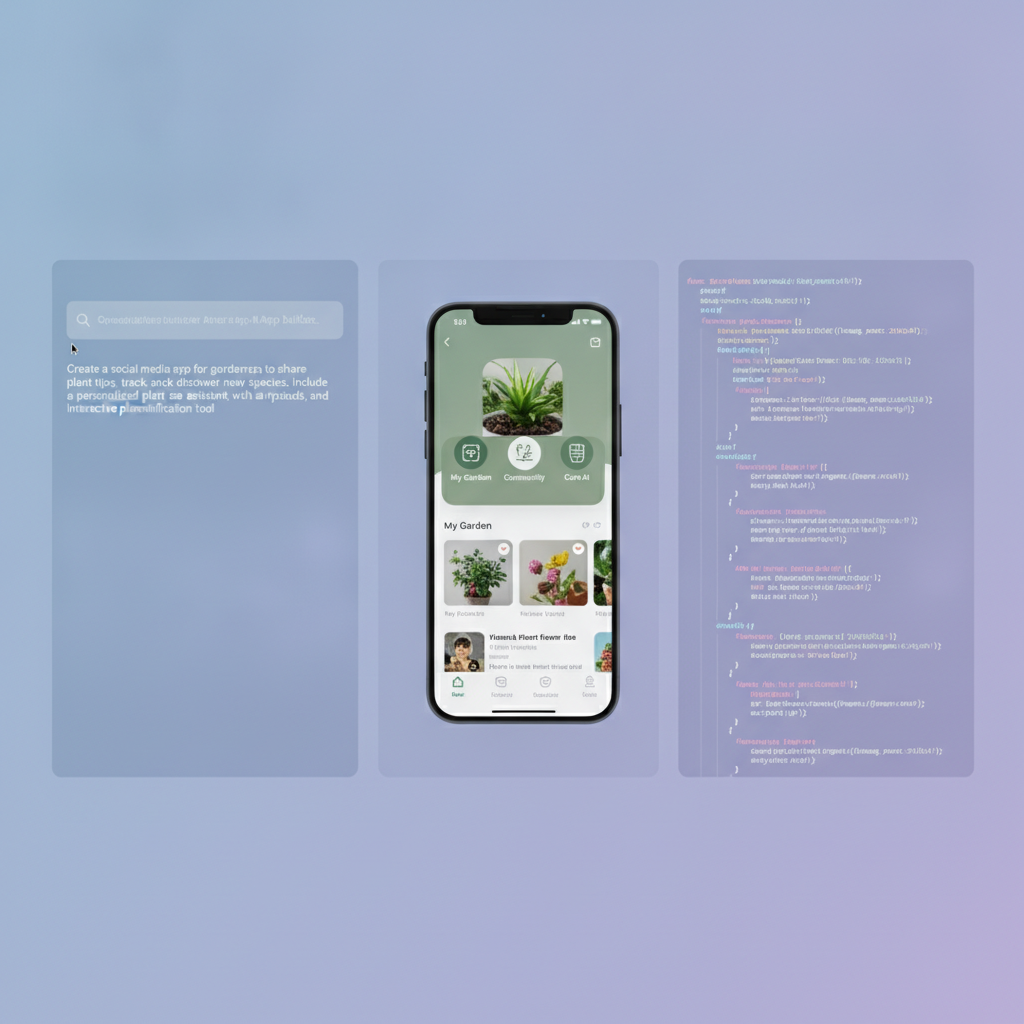
Builder B: The UI/UX Specialist
This builder places a strong emphasis on creating visually appealing and user-friendly interfaces. Its AI is trained to understand design principles and user experience best practices, resulting in applications that are not only functional but also aesthetically pleasing and intuitive to navigate.
Key Features:
- AI-Driven Design Assistance: Offers suggestions for layout, color schemes, and typography based on best practices.
- Interactive Prototyping: Allows users to preview and interact with the generated UI before code generation.
- Component-Based Generation: Focuses on creating reusable UI components that can be easily customized.
Example Prompt:
"Design a minimalist mobile app for a meditation service. The homepage should feature a calming background, a prominent 'Start Session' button, and a list of available meditation categories (e.g., Sleep, Focus, Stress Relief). Each category should lead to a screen with guided audio player controls, progress tracking, and session duration options. Include a user profile section for tracking meditation streaks."
The AI in this builder would prioritize the visual elements, ensuring a harmonious and engaging user experience.
Builder C: The Rapid Prototyper
For users who need to quickly validate an idea or build a minimum viable product (MVP), this builder offers unparalleled speed. It focuses on generating functional prototypes with core features, allowing for rapid iteration and testing.
Key Features:
- Lightning-Fast Generation: Optimized for speed, delivering functional prototypes in minutes.
- Core Feature Focus: Prioritizes essential functionalities to get a product to market quickly.
- Simplified Interface: Designed for ease of use, with minimal learning curve.
This is where tools like GetAppQuick truly shine, enabling individuals to transform a nascent idea into a tangible, testable application without significant upfront investment in development time.
Example Use Case with GetAppQuick:
Imagine a small business owner who wants to offer a simple booking system for their services. They can use GetAppQuick by entering a prompt like: "Create a mobile app for my hair salon. Users should be able to view available appointment slots, book a service with a specific stylist, and receive a confirmation email. Include a contact page with the salon's address and phone number." Within minutes, GetAppQuick generates a functional app that the salon owner can share with clients to test the booking process.
Practical Considerations and Code Examples
While AI app builders abstract away much of the coding, understanding some fundamental concepts and seeing how generated code might look can be beneficial. Most of these builders offer the option to export the generated code, allowing for further customization or integration into larger projects.
Choosing the Right Language and Framework
Many AI app builders are multi-lingual, supporting popular choices like:
- Dart/Flutter: Ideal for cross-platform mobile development, known for its expressive UI toolkit and fast development cycle.
- TypeScript/JavaScript (React, Vue, Angular): Dominant in web development, offering flexibility and a vast ecosystem of libraries.
- Python (Django, Flask): Often used for backend services and increasingly for AI-driven applications.
Let's consider a simplified example of how a "user profile" component might be generated in Dart for Flutter.
Dart (Flutter) Example: User Profile Widget
A prompt like "Create a user profile card with name, email, and profile picture" might result in code similar to this:
import 'package:flutter/material.dart';

class UserProfileCard extends StatelessWidget {
  final String name;
  final String email;
  final String profileImageUrl;

  const UserProfileCard({
    Key? key,
    required this.name,
    required this.email,
    required this.profileImageUrl,
  }) : super(key: key);

  @override
  Widget build(BuildContext context) {
    return Card(
      margin: const EdgeInsets.all(16.0),
      child: Padding(
        padding: const EdgeInsets.all(16.0),
        child: Column(
          mainAxisSize: MainAxisSize.min,
          children: <Widget>[
            CircleAvatar(
              radius: 50.0,
              backgroundImage: NetworkImage(profileImageUrl),
            ),
            const SizedBox(height: 16.0),
            Text(
              name,
              style: const TextStyle(
                fontSize: 20.0,
                fontWeight: FontWeight.bold,
              ),
            ),
            const SizedBox(height: 8.0),
            Text(
              email,
              style: const TextStyle(fontSize: 16.0),
            ),
          ],
        ),
      ),
    );
  }
}
This UserProfileCard widget can be easily integrated into a larger Flutter application. The AI would have generated this based on the prompt, including basic styling and layout.
TypeScript Example: Simple Data Fetching Component
For a web application, a prompt like "Create a component to fetch and display a list of products from an API endpoint /api/products" could yield TypeScript using React:
import React, { useState, useEffect } from 'react';

interface Product {
  id: number;
  name: string;
  price: number;
}

const ProductList: React.FC = () => {
  const [products, setProducts] = useState<Product[]>([]);
  const [loading, setLoading] = useState<boolean>(true);
  const [error, setError] = useState<string | null>(null);

  useEffect(() => {
    const fetchProducts = async () => {
      try {
        const response = await fetch('/api/products');
        if (!response.ok) {
          throw new Error(`HTTP error! status: ${response.status}`);
        }
        const data: Product[] = await response.json();
        setProducts(data);
      } catch (e) {
        setError('Failed to fetch products.');
        console.error('Error fetching products:', e);
      } finally {
        setLoading(false);
      }
    };

    fetchProducts();
  }, []);

  if (loading) {
    return <div>Loading products...</div>;
  }

  if (error) {
    return <div>Error: {error}</div>;
  }

  return (
    <div>
      <h2>Product List</h2>
      <ul>
        {products.map((product) => (
          <li key={product.id}>
            {product.name} - ${product.price.toFixed(2)}
          </li>
        ))}
      </ul>
    </div>
  );
};

export default ProductList;
This TypeScript example demonstrates how an AI can generate the boilerplate for fetching data, handling loading and error states, and rendering a list.
Challenges and Limitations
Despite the rapid progress, prompt-to-app builders are not without their challenges:
- Prompt Engineering: Crafting effective prompts requires skill and iteration. Ambiguous prompts can lead to unexpected results.
- Complexity Ceiling: Highly complex, enterprise-grade applications with intricate business logic or specialized hardware integrations may still require significant human intervention.
- Customization Depth: While AI can generate a solid foundation, deep customization or unique algorithmic implementations might necessitate manual coding.
- Security and Scalability: Ensuring the generated code is secure and scalable for high-traffic applications remains a critical consideration that often requires expert review.
The Future is Now: Empowering a New Generation of Creators
The advent of prompt-to-app technology marks a pivotal moment in the democratization of software development. It lowers the barrier to entry, enabling a broader audience to participate in the creation of digital tools and solutions. Whether you're a startup founder looking to rapidly prototype an idea, a small business owner seeking to streamline operations, or an individual with a creative vision, these AI app builders offer a powerful pathway to bring your concepts to life.
As the technology matures, we can expect AI app builders to become even more sophisticated, capable of handling more complex projects and offering deeper customization options. The role of the developer will likely evolve, shifting from writing boilerplate code to overseeing AI-generated solutions, focusing on architecture, complex problem-solving, and creative innovation.
Key Takeaways
- Prompt-to-App is Revolutionizing Development: Generating applications from text prompts is now a reality, drastically reducing development time and complexity.
- AI Advancements Drive the Trend: Sophisticated NLP and generative AI models are the backbone of these powerful tools.
- Leading Builders Offer Diverse Strengths: Platforms vary in their focus, from all-around capabilities and UI/UX specialization to rapid prototyping.
- Code Generation is Becoming Accessible: Understanding basic code structures in languages like Dart and TypeScript can enhance the use of AI builders.
- Human Oversight Remains Crucial: While AI accelerates development, prompt engineering, complexity management, and security still require human expertise.
The era of waiting months or years for software development is rapidly coming to a close. With tools like those discussed, and particularly with solutions designed for speed and efficiency, the ability to build and deploy applications is now within reach for a much wider audience. The potential for innovation and entrepreneurship is immense.
Ready to ship your idea? Build it in minutes with GetAppQuick.