Introduction: From AI Weekend Demos to Real Users
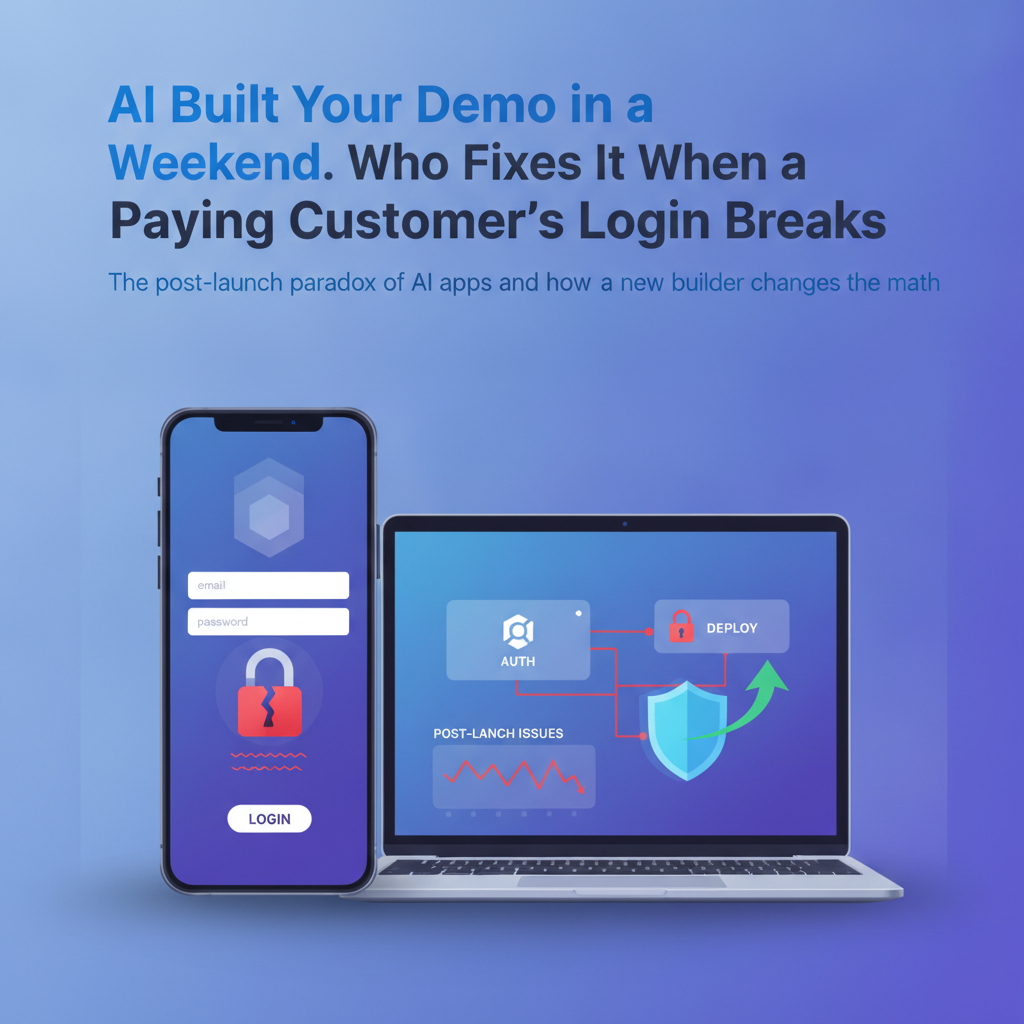
This week, the r/AIAgents subreddit lit up with a heated debate: “AI can build you an MVP in a weekend, but who fixes it when a user’s login breaks at 2am?” It’s a conversation that’s impossible to ignore in today’s rapid prototyping era. Generative AI and agent-powered platforms are turning napkin sketches into working apps at breakneck speed. But just as quickly, founders and indie hackers are running into a brick wall: the “everything after launch” problem.
Shipping a demo is easy. Handling user authentication, uptime, bug fixes, and evolving requirements? That’s where things get hard—and expensive. If you’re a solo founder, agency, or startup with tight resources, you need more than just a code generator. You need a platform that handles the critical stuff automatically, even after your AI has stitched together the first version.
That’s why tools like GetAppQuick, DC Codes’ AI-powered app builder, are changing the math. It’s not just about building your app—it’s about owning the post-launch lifecycle, from reliable auth to seamless upgrades. Let’s explore why “AI app development” is only half the story, and how you can ship faster and sleep at night.

The Problem: AI Builds Fast, But Who Patches the Leaks?
The Weekend Demo Mirage
AI-powered app builders and code assistants are truly impressive. They can scaffold out forms, dashboards, and even full-stack logic in minutes. But look at the top posts on r/AIAgents this week, and a pattern emerges: demo apps break down as soon as real users start using them.
- Authentication flows break with third-party logins.
- Data sync issues surface between client and backend.
- Hosting glitches cause downtime or slow loads.
- Security patches and compliance are afterthoughts.
These aren’t “nice to have” details—they’re the difference between a toy and a tool your customers can trust.
Why “Hello World” Isn’t Enough
Let’s be honest: no AI knows your customers’ edge cases. Consider a simple login flow:
// Dart/Flutter: naive login (demo)
Future<void> login(String username, String password) async {
  // Doesn't handle network errors, token expiry, or validation!
  final response = await http.post(
    Uri.parse('https://example.com/login'),
    body: {'username': username, 'password': password},
  );
  if (response.statusCode == 200) {
    // TODO: Securely store tokens, handle session
  } else {
    // TODO: Show user-friendly errors
  }
}
This might work for a weekend demo. But what about:
- Multi-factor authentication?
- Password reset flows?
- Session expiration and refresh tokens?
- GDPR/CCPA compliance on user data storage?
When a paying customer’s login breaks, “AI built my app” is no comfort.
The Real Work Starts After Launch
What Breaks When Real Users Arrive
Shipping to production is a different beast. Here’s what founders and devs encounter right after launch:
- Onboarding issues: Edge cases in signup (duplicate emails, social logins, etc.)
- Scaling pains: Can the hosting keep up as user numbers grow?
- Security holes: Insecure APIs, forgotten CORS settings, exposed admin panels.
- Continuous updates: Users expect new features, bug fixes, and zero downtime.
This is where traditional “AI MVP” tools struggle. Their job ends at scaffolding; yours is just beginning.
The Cost of Ignoring the “Boring Stuff”
Underestimating post-launch maintenance is risky:
- Support costs: Every broken login becomes a ticket, draining your time.
- Reputation damage: Customers don’t forgive flaky authentication or lost data.
- Technical debt: Hacked-together flows are hard to patch (or hand off to real engineers).
Founders pay dearly for skipping reliable infrastructure.
How Modern Builders Change the Equation
End-to-End Platforms: Not Just Code, But Care
The new generation of AI-powered builders—like GetAppQuick—are flipping the script. They aren’t just code generators. They offer:
- Managed authentication (OAuth, magic links, passwordless, 2FA)
- Automatic deployments to global hosting
- Scalable databases with built-in security
- Zero-config CI/CD for bug-free updates
- Built-in monitoring and error reporting
This means the “hard part”—everything that happens after launch—isn’t your burden alone.
A Concrete Example: Fixing Auth Without Losing Sleep
Let’s say you launch a SaaS with social login, and your users start reporting random sign-in failures. A traditional AI code generator might leave you with a tangled mess. But with GetAppQuick, you get:
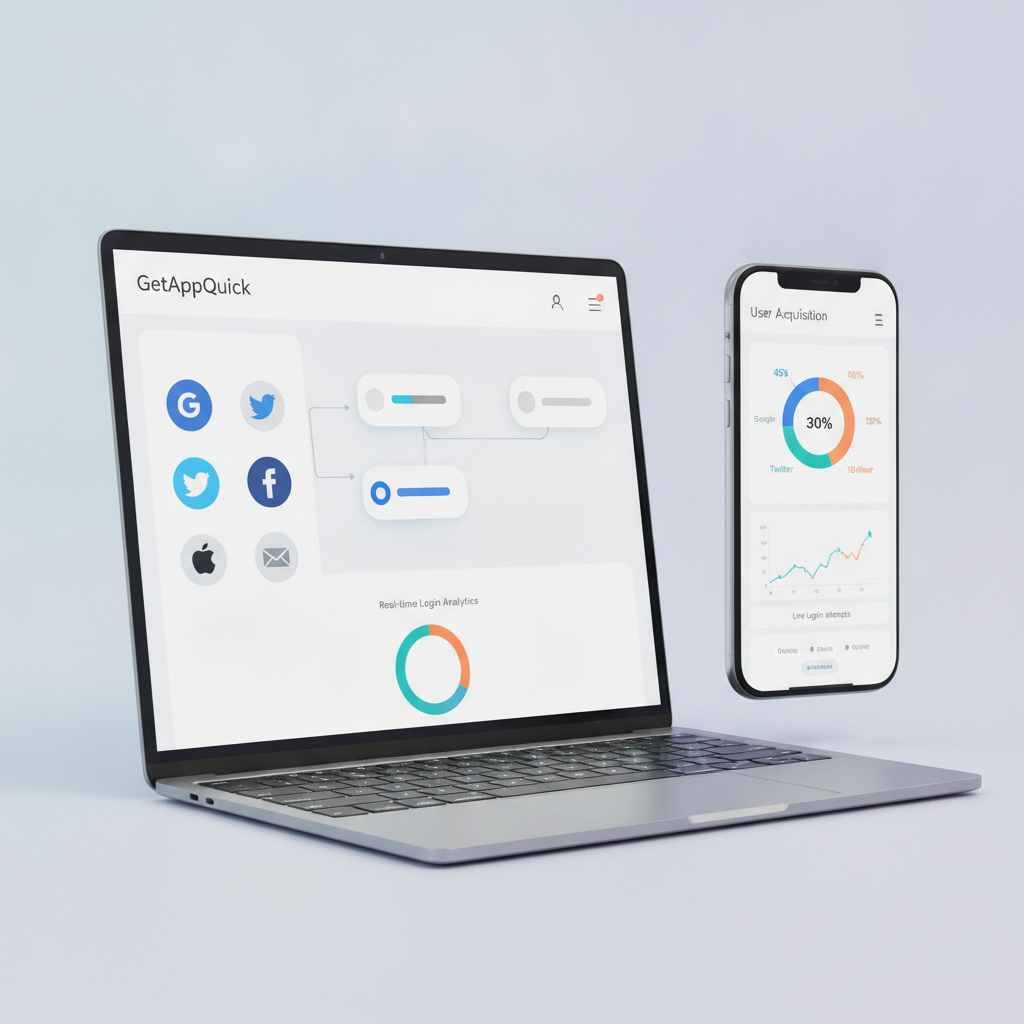
- Centralized Auth Dashboard: See failed logins, audit activity, and roll out fixes with one click.
- Configurable Providers: Add or update Google, Facebook, or Apple login without code changes.
- Recovery Flows: Password reset and account recovery are handled out-of-the-box, with customizable UI.
- Secure by Default: Tokens, refresh logic, and rate limiting are baked in.
Here’s how you might update auth provider settings in a modern TypeScript-based builder:
// TypeScript: Updating supported OAuth providers
const appConfig = getAppQuick.getAuthConfig();
appConfig.enableProvider('google', { clientId: '...', clientSecret: '...' });
appConfig.enableProvider('github', { clientId: '...', clientSecret: '...' });
getAppQuick.deployAuthConfig(appConfig);
No need to patch the backend, redeploy, or hunt down expired credentials—your builder handles the heavy lifting.
Hosting, Deploys, and the Unseen Complexity
Hosting Isn’t Just “Heroku for Free”
Modern apps need more than “it runs on a server.” They need:
- Zero-downtime deploys
- Automatic SSL/TLS
- Edge caching and CDN
- Rollbacks if a release fails
AI-generated apps rarely handle these for you. But platforms like GetAppQuick bake them in.
Continuous Delivery Without Headaches
Suppose you add a new feature (say, a dark mode toggle) and need to push it to users:
// TypeScript: Deploying a new feature with GetAppQuick
getAppQuick.deployFeature({
  featureName: 'darkMode',
  enabled: true,
  rolloutPercentage: 100, // Gradual rollout supported!
});
- Canary releases and feature flags are built-in.
- If your deploy introduces a bug, automatic rollback can save the day.
This is what separates a “demo app” from a real SaaS business.
Security, Monitoring, and User Trust
Security By Default
It’s not enough to hope your app isn’t hacked. Builders like GetAppQuick:
- Enforce HTTPS everywhere
- Isolate database credentials
- Automatically patch dependencies for known vulnerabilities
You can focus on your product, not on chasing every new exploit.
Monitoring: Know Before Your Users Do
When something breaks, you want to know before your support inbox fills up.
- Built-in error tracking (e.g., see which endpoints fail most)
- Alerts for unusual logins or suspicious activity
- Usage analytics to optimize performance as you scale
With these, you’re not flying blind. You can respond proactively, not reactively.
What About When You Need to Go Beyond the Basics?
Extensibility and Real Code
Even the best AI builder can’t predict every need. GetAppQuick lets you:
- Inject custom business logic (Dart, TypeScript, or via REST APIs)
- Add webhooks for third-party integrations
- Export or clone code for advanced customization
Example: Want to send a Slack notification on new signups?
// TypeScript: Custom webhook on signup
getAppQuick.on('userSignup', (user) => {
  fetch('https://hooks.slack.com/services/xxx', {
    method: 'POST',
    body: JSON.stringify({ text: `New signup: ${user.email}` }),
  });
});
You’re not locked in—you’re empowered.
Key Takeaways
- AI can build MVPs fast, but the “hard part” is post-launch: Supporting real users means handling auth, hosting, deploys, and security with care.
- Most code-generation tools leave you alone after launch: You’re responsible for patching leaks, handling edge cases, and scaling.
- Modern builders like GetAppQuick solve the whole problem: From managed authentication to robust hosting and monitoring, they change what’s possible for solo founders and agencies.
- Extensibility is key: You can use no-code for speed, but always have the power of real code for special needs.
- Protect your time and reputation: Choose a platform that supports your business, not just your demo.
Conclusion: Don’t Just Build Fast—Build to Last
AI is revolutionizing app development, but the future belongs to those who think beyond the weekend demo. You need an approach that makes launching and running a real product sustainable—without hiring a huge team or waking up to panicked customer emails about broken logins.
If you want to win in a world of AI-generated apps, focus on operational excellence. Choose platforms that have your back after launch. GetAppQuick is built with this philosophy: ship your idea fast, and trust that the foundations—auth, hosting, updates, monitoring—are taken care of, so you can focus on what matters.
Ready to ship your idea? Build it in minutes with GetAppQuick.