AI App Builders in 2026: From Idea to Shipped App in a Weekend
How modern AI app builders turn a plain idea into a working, shippable app fast — and what it means for founders and developers.
The pace of innovation in software development has always been rapid, but in 2026, it feels like we're sprinting. What once took months, or even years, of meticulous coding, design, and testing can now, with the right tools, be compressed into a matter of days or even hours. This paradigm shift is largely driven by the maturation of AI app builders, platforms that leverage artificial intelligence to transform a conceptual idea into a functional, shippable application with astonishing speed. For entrepreneurs, startups, and even established development teams, understanding and harnessing these tools is no longer a competitive advantage; it's a necessity.
For decades, the path from a brilliant app idea to a market-ready product has been paved with significant technical hurdles. It involved assembling skilled development teams, extensive planning, coding cycles, debugging, UI/UX design, and deployment strategies. This process, while leading to robust and polished applications, inherently placed a high barrier to entry. Many innovative ideas never saw the light of day due to resource constraints, time limitations, or the sheer complexity of bringing them to life.
Enter AI app builders. These platforms represent a significant leap forward, democratizing app development and empowering a wider range of individuals to become creators. They abstract away much of the underlying complexity, allowing users to focus on the core functionality and user experience of their app. Instead of writing thousands of lines of code, you can often describe your app's features, define its logic, and guide its design using natural language prompts or intuitive visual interfaces.
The trend towards low-code and no-code solutions has been building for years, with platforms like Bubble and Adalo gaining significant traction. However, AI app builders take this a step further by integrating sophisticated AI models that can understand intent, generate code, suggest designs, and even automate testing. This synergy between human creativity and artificial intelligence is what's truly revolutionizing the app development landscape in 2026. We're moving beyond simply assembling pre-built components to having AI actively participate in the creation process.
This isn't science fiction; it's the current reality. Platforms like GetAppQuick are at the forefront, offering a tangible way for anyone with a clear app idea to bypass traditional development bottlenecks and bring their vision to life rapidly.
The Core Mechanics: How AI App Builders Work
At their heart, AI app builders function by translating high-level descriptions of desired functionality into actual code and application structures. The process typically involves several key stages, each enhanced by artificial intelligence:
1. Idea Conception and Feature Definition
This is where the user's vision takes shape. Modern AI app builders allow you to articulate your app's purpose and core features using natural language. You might say, "I want an app that allows users to track their daily water intake, set reminders, and view their progress over time." The AI then interprets this request, breaking it down into manageable components.
For instance, it might identify the need for:
- User Authentication: To personalize the experience.
- Data Input Fields: For users to log water consumption.
- Reminder System: To prompt users at set intervals.
- Data Visualization: To display progress charts.
- User Profiles: To store historical data.
The AI can also ask clarifying questions, much like a human project manager, to refine requirements. "What units of measurement should be supported (ml, oz, cups)?" or "What kind of charts would best represent progress (line graph, bar chart)?"
2. UI/UX Design Generation
Once the functional requirements are understood, AI can assist in designing the user interface (UI) and user experience (UX). Based on common design patterns, industry best practices, and sometimes even user-provided inspiration (e.g., "Make it look similar to Spotify's design"), the AI can generate mockups and initial UI layouts.
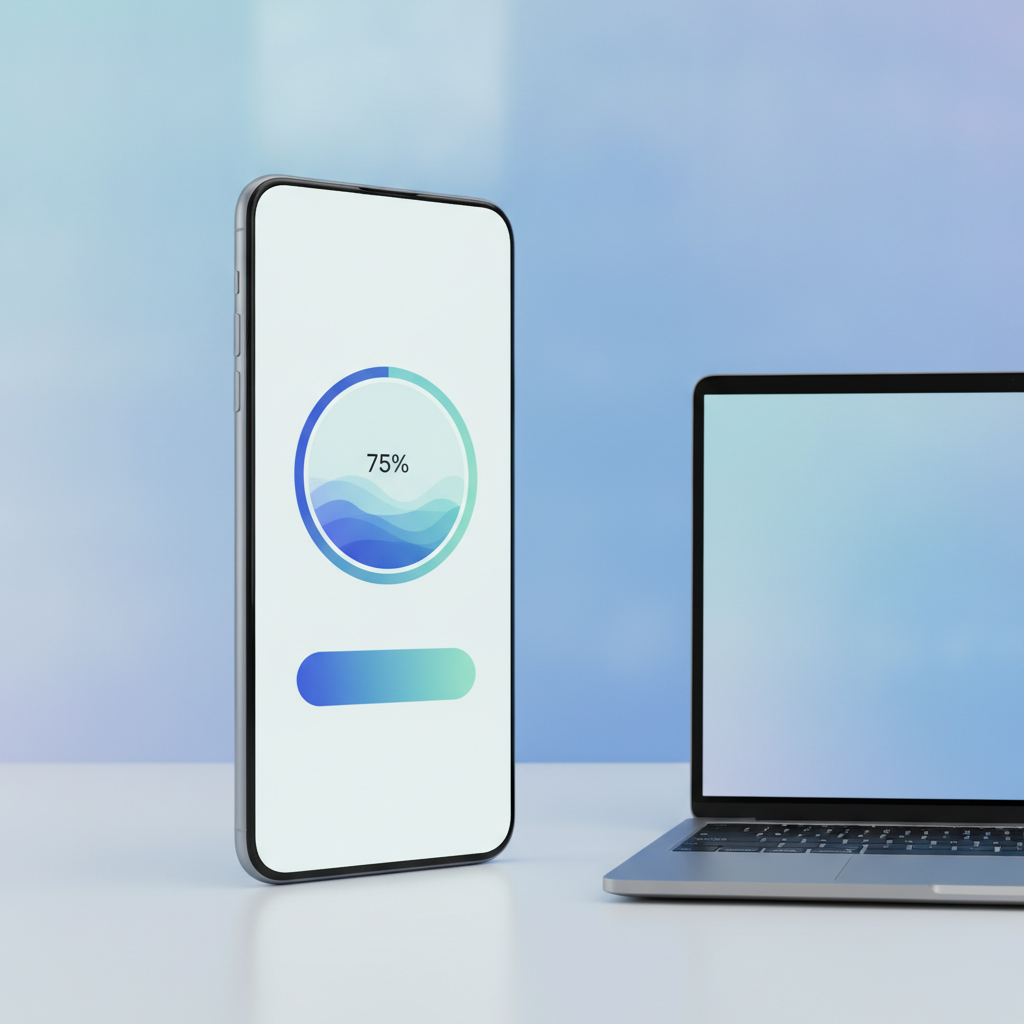
This AI-driven design process can significantly accelerate the initial design phase. It can propose color palettes, typography, and element placement, ensuring a visually appealing and user-friendly experience. Developers or founders can then iterate on these AI-generated designs, making tweaks and adjustments through intuitive visual editors.
3. Code Generation and Logic Implementation
This is arguably the most transformative aspect. The AI app builder translates the defined features and UI elements into functional code. Depending on the platform, this might involve generating code in popular frameworks like Flutter/Dart, React Native, or Swift/Kotlin.
Consider a simple feature like logging water intake. In a traditional setting, this might involve:
- Creating a form input for the amount.
- Writing a function to validate the input.
- Defining a database schema to store the entry.
- Implementing logic to update the user's daily total.
An AI app builder can automate much of this. You might define a "Log Water" button and associate it with an action: "When this button is tapped, add the value from the 'amount' field to the user's daily total and save it." The AI then generates the necessary Dart code (if targeting Flutter) or TypeScript (if targeting a web framework) to implement this logic.
Here's a simplified conceptual example of what the AI might generate in Dart for a Flutter app:
// Function to handle logging water intake
void logWaterIntake(double amount) {
  if (amount <= 0) {
    // Show an error message to the user
    print("Please enter a valid amount.");
    return;
  }

  // Assuming 'currentUser' is a global or accessible object
  // and 'dailyWaterLog' is a list or stream of entries
  var newEntry = WaterLogEntry(timestamp: DateTime.now(), amount: amount);
  currentUser.dailyWaterLog.add(newEntry);
  currentUser.updateTotalWaterIntake(amount);

  // Save the updated data to persistent storage (e.g., local database or cloud)
  saveUserData(currentUser);

  print("Water intake logged successfully: $amount ml");
}

// Example UI snippet (simplified)
ElevatedButton(
  onPressed: () {
    double enteredAmount = double.tryParse(_waterAmountController.text) ?? 0.0;
    logWaterIntake(enteredAmount);
    _waterAmountController.clear(); // Clear the input field
  },
  child: Text("Log Water"),
)
This code snippet illustrates how AI can generate functions, handle basic validation, interact with a hypothetical user data model, and even connect to UI elements. The complexity can scale dramatically, with AI handling more intricate logic, API integrations, and data management.
4. Testing and Debugging
Modern AI app builders also incorporate automated testing capabilities. Once the application is generated, the AI can perform various tests to identify bugs and ensure functionality. This can include unit tests for individual functions, integration tests for how different components interact, and even UI tests to verify user flows.
AI can also assist in debugging by analyzing error logs and suggesting potential fixes. This significantly reduces the time developers spend on finding and fixing bugs, a notoriously time-consuming part of the traditional development lifecycle.
The Impact on Founders and Developers
The advent of sophisticated AI app builders like GetAppQuick has profound implications for both aspiring entrepreneurs and seasoned developers.
For Founders and Entrepreneurs
- Reduced Time-to-Market: This is the most significant benefit. Ideas that might have taken months to prototype can now be realized as Minimum Viable Products (MVPs) in days or even a weekend. This allows for faster iteration based on user feedback and quicker market entry.
- Lower Development Costs: Building a functional app often requires hiring expensive developers. AI app builders drastically reduce or even eliminate the need for a large, specialized development team, making app creation accessible to those with limited budgets.
- Validation of Ideas: Founders can quickly build functional prototypes to test market demand and gather user feedback before investing heavily in full-scale development. This reduces the risk associated with launching new products.
- Empowerment of Non-Technical Founders: Individuals with brilliant business ideas but no coding background can now bring their visions to life independently. This democratizes entrepreneurship and opens doors for diverse innovation.
A recent study by TechCrunch highlighted the surge in no-code/low-code adoption, with a significant portion attributing their project's success to rapid prototyping enabled by AI-driven tools. This indicates a clear market trend towards faster, more accessible development cycles.
For Developers
- Focus on Higher-Value Tasks: For existing development teams, AI app builders can automate repetitive and boilerplate coding tasks. This frees up developers to concentrate on complex architectural challenges, advanced feature development, performance optimization, and innovative solutions that require human ingenuity.
- Accelerated Prototyping and MVPs: Developers can use AI builders to quickly generate initial versions of apps or features, allowing them to rapidly test concepts and gather feedback from stakeholders.
- Learning and Skill Augmentation: AI can act as a coding assistant, suggesting code snippets, explaining complex concepts, and even helping debug. This can be a powerful learning tool for junior developers and a productivity booster for experienced ones.
- New Skill Sets: The rise of AI app builders doesn't make developers obsolete; it shifts the required skill set. Proficiency in prompt engineering, AI model integration, strategic oversight of AI-generated code, and advanced customization will become increasingly valuable.
The World Economic Forum's "Future of Jobs Report" consistently points to the growing demand for skills related to AI and automation, alongside the need for adaptability and continuous learning. AI app builders fit squarely within this evolving landscape.
Practical Use Cases and Examples
The versatility of AI app builders allows them to be applied across a wide spectrum of industries and needs.
Internal Business Tools
Many companies require custom internal tools to streamline operations – think inventory management systems, CRM extensions, or project tracking dashboards. Building these from scratch can be resource-intensive. An AI app builder can rapidly generate these tools based on specific business process requirements.
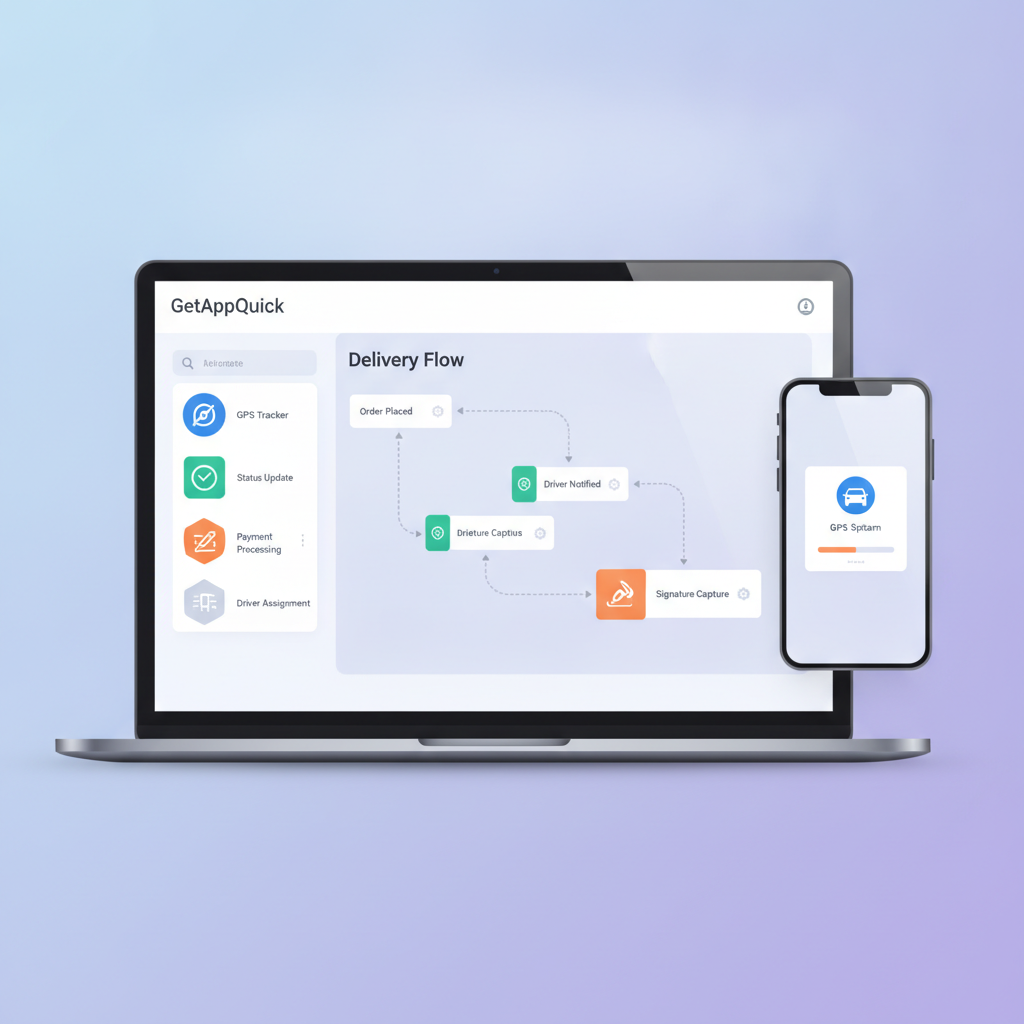
For example, a logistics company might use an AI app builder to create a custom delivery tracking app for their drivers. The app could integrate with existing GPS services, allow drivers to update delivery statuses, capture signatures, and even upload photos of proof of delivery.
Niche Consumer Apps
Forget the months-long development cycle for a simple utility or lifestyle app. Need a specific habit tracker, a local event aggregator, or a personalized recipe generator? AI app builders can deliver these quickly.
Consider a small business owner wanting an app for their local bakery. They could use an AI app builder to create an app that showcases daily specials, allows customers to place pre-orders for pickup, and sends push notifications for new menu items. This can be built and deployed within a few days, providing a direct channel to customers.
Educational Tools
AI app builders can be used to create interactive learning modules, flashcard apps, or quiz generators for students and educators. The ability to quickly prototype and iterate on educational content is invaluable for adapting to diverse learning needs.
Rapid Prototyping for Startups
This is perhaps the most celebrated use case. A startup founder with an innovative idea for a social networking platform, a unique e-commerce experience, or a novel service can leverage AI app builders to create a functional MVP. This MVP can then be used to:
- Attract early adopters: Get real users providing valuable feedback.
- Demonstrate the concept to investors: Show a working product instead of just a slide deck.
- Validate core assumptions: Test the fundamental premise of the business idea.
Tools like GetAppQuick excel here, enabling founders to go from a whiteboard sketch to a shareable app in an incredibly short timeframe. This speed allows for agile pivoting and adaptation, crucial in the volatile startup ecosystem.
Navigating the Landscape: Choosing and Using AI App Builders
While the promise of AI app builders is immense, success hinges on choosing the right platform and using it effectively.
Key Considerations When Selecting a Builder:
- Ease of Use vs. Customization: Some builders are extremely simple, ideal for basic apps, while others offer deeper customization options for more complex requirements. Understand your needs.
- Target Platform(s): Does the builder generate native iOS/Android apps, progressive web apps (PWAs), or both?
- Integration Capabilities: Can it connect with other services you use (e.g., payment gateways, CRMs, databases)?
- Scalability: Can the apps built on the platform handle growth in user numbers and data?
- AI Capabilities: How sophisticated is the AI in understanding natural language, generating code, and assisting with design? Look for platforms that offer genuine AI assistance beyond simple templating.
- Pricing Model: Understand the costs involved, especially as your app scales.
Best Practices for Using AI App Builders:
- Be Specific with Prompts: The clearer and more detailed your descriptions, the better the AI can understand and execute your vision.
- Iterate and Refine: Treat the AI-generated output as a starting point. Be prepared to refine designs, tweak logic, and add custom touches.
- Understand the Underlying Technology (Even if Abstracted): While you don't need to be a coding expert, having a basic understanding of app architecture, data flow, and UI/UX principles will help you guide the AI more effectively and identify potential limitations.
- Focus on the User Experience: AI can generate functionality, but crafting a truly delightful user experience still requires human empathy and design thinking.
- Don't Neglect Testing: Even with AI-assisted testing, manual testing and user acceptance testing are crucial to ensure a high-quality product.
The AI doesn't replace the need for strategic thinking and user-centric design; it augments it, providing powerful tools to execute those strategies with unprecedented speed.
The Future is Now: Challenges and Opportunities
The rapid advancement of AI app builders presents both exciting opportunities and legitimate challenges.
Opportunities:
- Hyper-Personalized Apps: AI can analyze user data to generate highly personalized app experiences on the fly.
- Democratization of Innovation: More individuals can become creators, leading to a wider diversity of applications and solutions.
- Augmented Development Teams: Human developers will work in tandem with AI, leading to unprecedented productivity gains.
- Faster Response to Market Needs: Businesses can adapt and launch new digital products in response to changing market dynamics much more quickly.
Challenges:
- Code Quality and Maintainability: While AI is improving, generated code might sometimes be less optimized or harder to maintain than meticulously hand-written code, especially for highly complex systems.
- Security Concerns: Ensuring the security of AI-generated applications requires robust platform-level security and careful oversight.
- Over-Reliance and Skill Atrophy: A risk exists that over-reliance on builders could lead to a decline in fundamental coding skills if not balanced with continuous learning.
- Ethical Considerations: Bias in AI models used for design or functionality can inadvertently be incorporated into applications.
The consensus among industry analysts is that AI app builders are not a fad but a fundamental shift in how software is created. A 2025 Gartner report predicted that by 2027, over 70% of new applications developed by enterprises will use low-code or no-code technologies, with AI playing an increasingly integral role.
Key Takeaways
- AI App Builders Accelerate Development: Modern platforms can transform an idea into a shippable app in days or even hours, drastically reducing time-to-market.
- Democratization of Creation: Non-technical founders and individuals can now build functional applications without extensive coding knowledge.
- Focus Shift for Developers: Developers can automate routine tasks and focus on complex problem-solving and innovation.
- Iterative Process: AI builders are powerful tools, but human oversight, refinement, and user-centric design remain critical for success.
- Future is Collaborative: The most effective development in 2026 and beyond will involve a synergy between human expertise and AI capabilities.
The landscape of app development has irrevocably changed. The power to create, iterate, and launch is no longer confined to those with deep technical expertise. With the right tools, like intelligent AI app builders, anyone can turn a spark of an idea into a tangible, functional application. This democratization of development is not just a trend; it's the foundation for the next wave of digital innovation.
Ready to ship your idea? Build it in minutes with GetAppQuick.