Introduction
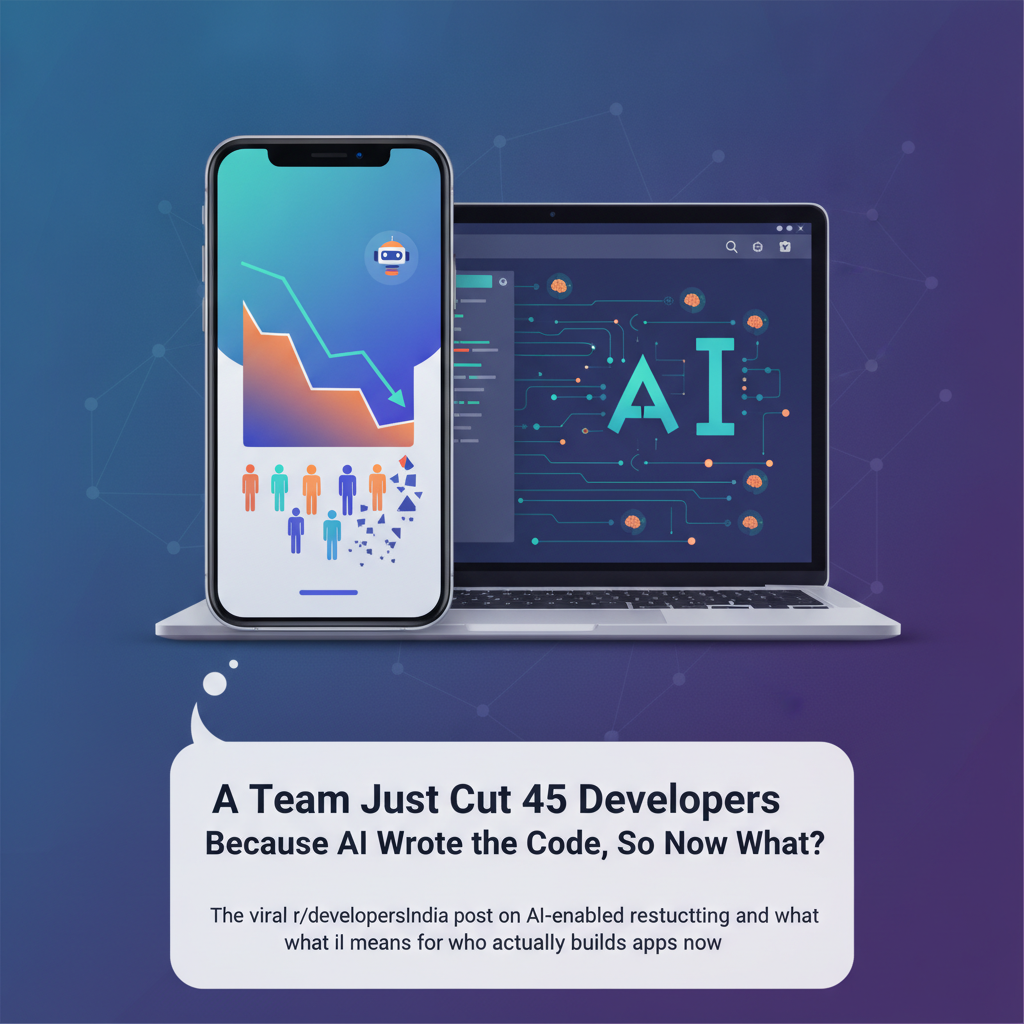
Recently, the developer world has been abuzz with a viral post on r/developersIndia: a company laid off 45 developers after successfully deploying AI tools to write significant portions of their codebase—faster, cheaper, and (mostly) bug-free. For many software engineers, this wasn’t just another headline; it felt like a seismic shift. If AI can build apps, automate workflows, and even fix its own bugs, what role remains for human developers? Is full-stack expertise obsolete, or are we entering a new era where the “developer” looks very different?
This disruption is no longer hypothetical. Here at DC Codes, we’ve seen firsthand how tools like GetAppQuick—our AI-powered app builder that turns plain ideas into production-ready apps—are making it possible for startups and enterprises to launch new products without massive development teams. In this post, we’ll break down what the viral layoff story really means, explore who’s actually building apps today, and discuss how modern devs (and non-devs) can thrive in the AI-powered landscape.
What Really Happened: The AI Restructuring Wave
The r/developersIndia post didn’t go viral just because of job losses—it hit a nerve about the future of our profession. The team in question reportedly replaced redundant roles with a combination of AI code generation, no-code platforms, and a handful of technical leads for oversight.
Key drivers highlighted:
- Speed: AI-generated code delivered new features in hours, not weeks.
- Cost: The company slashed overhead by automating boilerplate and repetitive tasks.
- Scale: AI tools handled multiple platforms (web, mobile) without additional hires.
This isn’t isolated. Across Vietnam, India, and beyond, companies are rethinking their entire development pipeline. But what does this mean for the people who used to build those apps line by line?
Who Is Actually Building Apps Now?
If AI can write code, are developers out of the picture? Not quite. The answer is nuanced—and full of new opportunities.
1. The Rise of the “Prompt Engineer”
Modern AI platforms (like GPT-4 or specialized dev tools) require someone to guide the process: define features, describe the user journey, and validate outputs.
Example: Instead of spending hours writing login logic in Dart for Flutter, a prompt engineer could request:
"Build a Flutter login screen with email/password, Google sign-in, and error handling."
The AI then produces the code:
// Flutter Login Screen with Email/Password and Google Sign-In

import 'package:flutter/material.dart';
import 'package:google_sign_in/google_sign_in.dart';

class LoginScreen extends StatelessWidget {
  // ... initialization and logic omitted for brevity

  @override
  Widget build(BuildContext context) {
    return Scaffold(
      body: Center(
        child: Column(
          children: [
            // Email/Password fields
            // Google Sign-In button
            // Error handling widgets
          ],
        ),
      ),
    );
  }
}
What changes? The developer’s value shifts from writing code by hand to architecting flows, reviewing outputs, and tuning prompts for AI.
2. The Human-in-the-Loop: Validation and Creativity
AI can churn out CRUD (Create, Read, Update, Delete) screens or boilerplate business logic with impressive speed. But for complex integrations, business logic, or user experience nuances, humans are essential.
Key Activities:
- Verifying security (AI sometimes makes security blunders).
- Integrating with legacy APIs or undocumented systems.
- Designing delightful, accessible UIs.
3. Product Owners, Not Just Coders
Platforms like GetAppQuick empower founders, designers, and even non-technical staff to take an app from concept to launch—often without writing a single line of code.
Use Case:
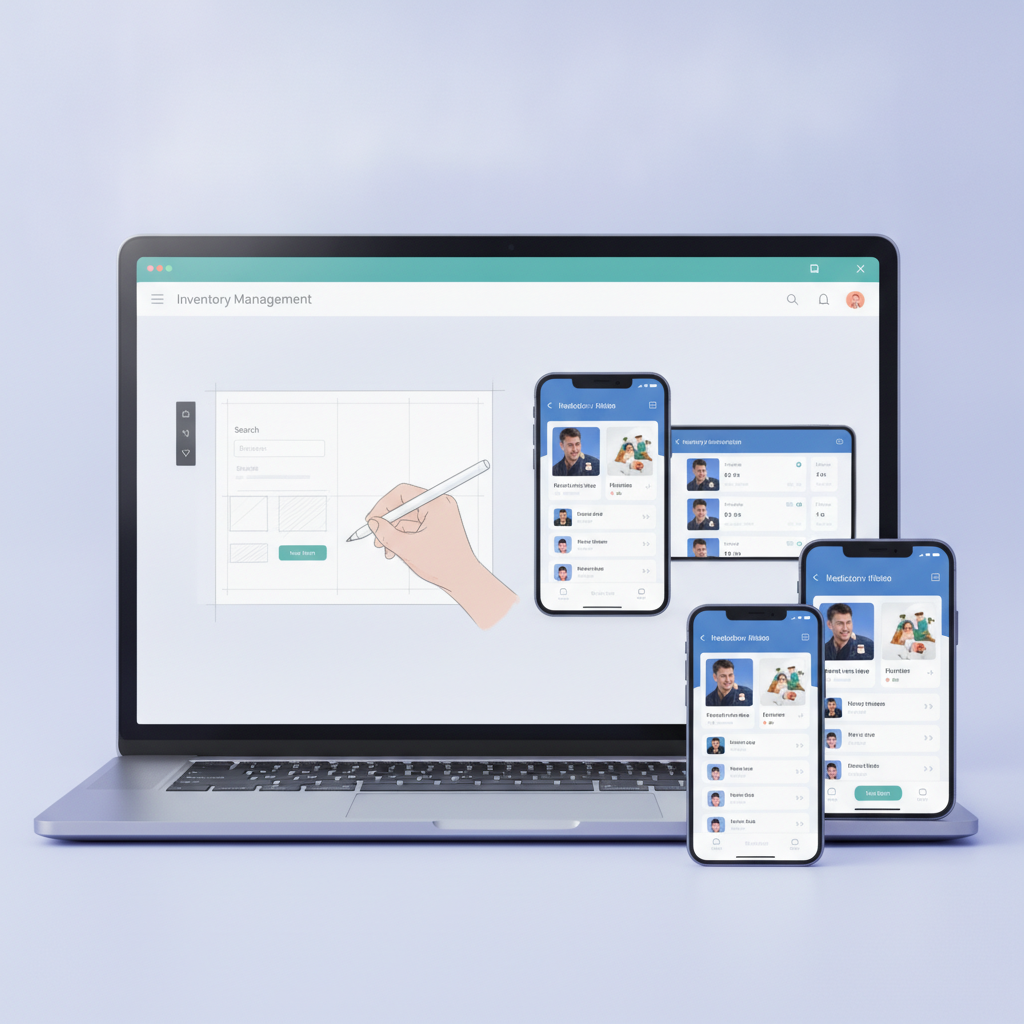
A small business owner needs a custom inventory tracker. Using GetAppQuick, they describe their needs (“I want to scan product barcodes, see stock history, and get low-stock alerts”) and receive a ready-to-use app for iOS, Android, and web in minutes.
How AI-Powered App Builders Work
The New App Pipeline
Modern AI-driven builders combine several layers:
- Natural Language Understanding: Converts your requirements into structured data.
- Component Assembly: Selects and configures prebuilt widgets (e.g., login forms, data tables).
- Code Generation: Outputs Dart (Flutter), TypeScript, or native code, ready to deploy.
- Instant Preview and Deployment: Lets you test and launch apps right away.
Practical Example: From Idea to App with AI
Let’s say you want a simple event RSVP app for your club.
Step 1: Describe Your Idea
"I need an app for people to RSVP for events, with a list of upcoming events and an RSVP button for each."
Step 2: AI Generates the UI and Logic
The AI generates the code (example in TypeScript/React):
// EventList.tsx - List of Events with RSVP

import React, { useState } from 'react';

const events = [
  { id: 1, name: 'Tech Meetup', date: '2024-06-20' },
  { id: 2, name: 'Networking Night', date: '2024-06-27' }
];

export default function EventList() {
  const [rsvps, setRsvps] = useState<number[]>([]);

  function handleRSVP(eventId: number) {
    setRsvps([...rsvps, eventId]);
  }

  return (
    <div>
      {events.map(event => (
        <div key={event.id}>
          <h3>{event.name} - {event.date}</h3>
          <button onClick={() => handleRSVP(event.id)}>
            {rsvps.includes(event.id) ? 'RSVPed' : 'RSVP'}
          </button>
        </div>
      ))}
    </div>
  );
}
Step 3: Review, Customize, and Ship
You can fine-tune the design or business logic, but 80% of the work is already done.
What This Means for Developer Teams
Smaller, Smarter, More Strategic
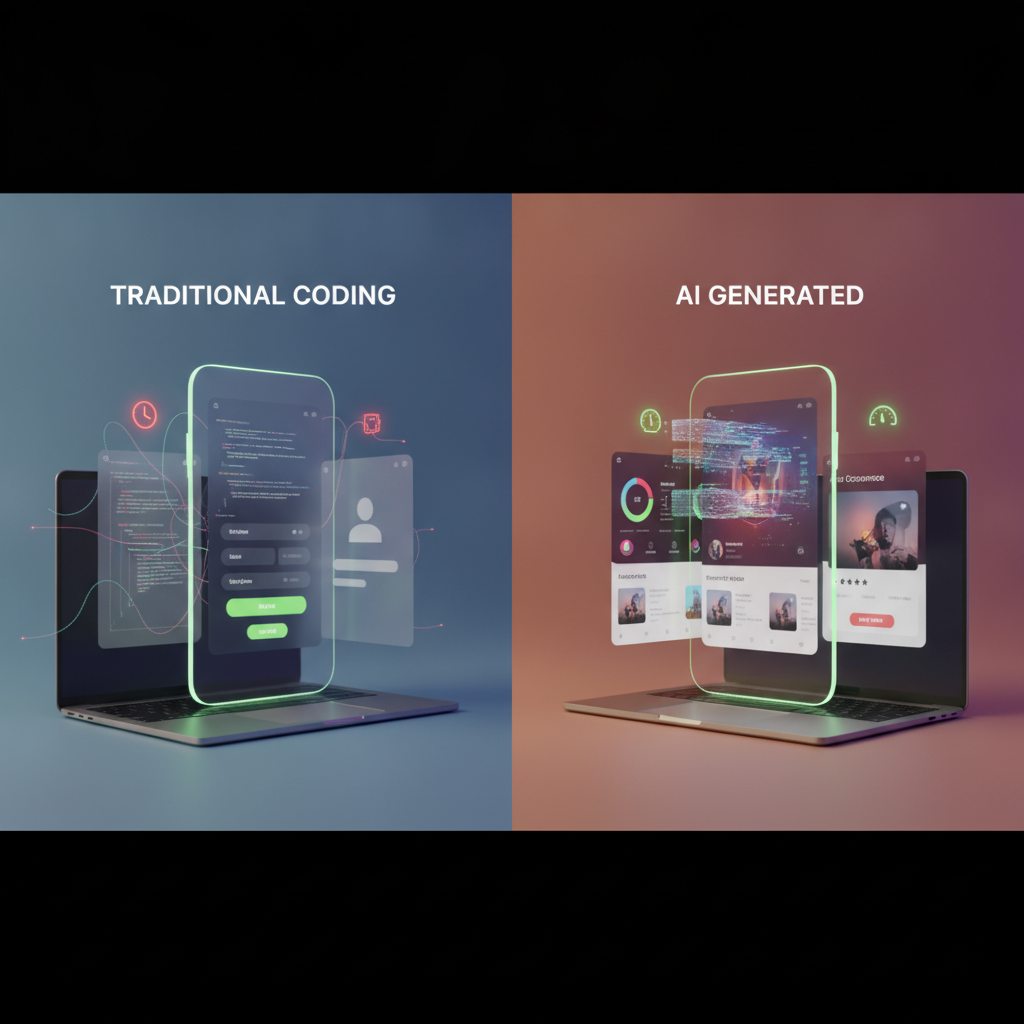
AI-powered tools don’t eliminate developers, but they do reduce the need for large teams cranking out routine features. The winners are teams who:
- Focus on product strategy and user experience.
- Embrace rapid prototyping and iteration.
- Cultivate skills in AI prompting, validation, and integration.
New Roles, Not Fewer Roles
Think of the shift like this:
| Before (Traditional) | Now (AI-enabled) |
|---|---|
| Frontend/Backend Devs | Product Owner/Prompt Engineer |
| Manual QA Testers | Automated Validation Lead |
| Project Managers | AI Workflow Designers |
| Full-stack Generalists | AI-Orchestration Architects |
Don’t Panic—Adapt
The viral layoff story is a wake-up call, but not a death sentence. For teams willing to adapt, AI is an amplifier—one that lets a small group ship features at the speed of much larger teams. And with tools like GetAppQuick, even non-coders can launch production-ready apps without waiting for scarce developer resources.
Practical Tips: Thriving in the AI-Built App Era
For Developers
- Master AI tools: Learn to prompt, validate, and integrate AI-generated code.
- Focus on higher-level design: Architecture, data modeling, security, and performance aren’t going away.
- Embrace continuous learning: The tech stack may change, but meta-skills (problem solving, communication) last.
For Teams/Founders
- Prototype fast: Use AI builders to validate ideas before investing in custom engineering.
- Automate the mundane: Let AI handle login screens, CRUD dashboards, and boilerplate—focus your team on unique value.
- Get client feedback early: Instant previews with AI tools mean you can iterate with real users quickly.
For Non-Technical Stakeholders
- Get involved: Platforms like GetAppQuick remove the barrier between “idea” and “app”—if you can describe it, you can build it or at least get a working prototype to show.
Key Takeaways
- AI-driven restructuring is real and happening—developers must adapt to new roles.
- Modern app builders like GetAppQuick empower smaller teams and even non-developers to ship apps fast.
- The “new developer” is a prompt engineer, validator, and product thinker—not a code monkey.
- Human expertise still matters for security, UX, and complex integrations.
- The future belongs to those who can combine AI automation with human creativity and insight.
Conclusion
The viral layoff of 45 developers isn’t the end of professional software development—it’s a pivot point. As AI gets better at building apps, the value of teams (and individuals) shifts from raw coding to product vision, strategic oversight, and creative problem-solving. Whether you’re a founder with a dream, a designer itching to build, or a developer ready to level up, tools like GetAppQuick make it possible to go from idea to app in record time.
Ready to ship your idea? Build it in minutes with GetAppQuick.